









































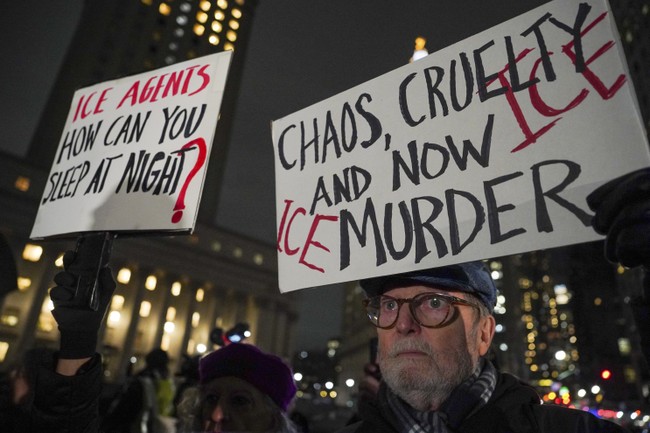
Protesters gathered in New York City on Wednesday to express their outrage over an incident in Minneapolis where an ICE agent shot a female driver in what was described as self-defense. The demonstration turned contentious as some participants called for violence against federal officials, including Homeland Security Secretary Kristi Noem and ICE agents.
During the protest, attendees chanted slogans advocating for the hanging of Noem and the execution of ICE personnel. Footage shared on social media captured the intensity of the gathering, showcasing a range of voices from the crowd. One woman attempted to counter the violent rhetoric, stating, “two wrongs don’t make a right,” but her message was quickly overshadowed by the louder chants of the group.
The protest included chants such as “Kristi Noem will hang” and “Save a life, kill an ICE agent,” illustrating the heightened emotions surrounding the immigration enforcement agency. Comments from the crowd also targeted political commentator Charlie Kirk, demonstrating a broader discontent with conservative figures.
Political Reactions to the Protest
The response to the protest has drawn scrutiny from various political figures. Observers have noted that newly inaugurated New York City Mayor Zohran Mamdani has not publicly condemned the violent sentiments expressed during the march. Critics argue that his silence may indicate an alignment with the protesters’ views, raising questions about his leadership in managing public safety and political discourse in the city.
Amid the chaos, some commentators have expressed concern that the protest reflects a deeper issue of political violence becoming normalized within certain groups. Discussions on social media have been rife with comments suggesting that the rhetoric of violence could lead to serious consequences if left unaddressed. Many are calling for a reassessment of how political dissent is expressed and the potential implications for civil society.
While some assert that these protests represent a legitimate expression of frustration with federal immigration policies, others warn that advocating for violence undermines the principles of democracy and dialogue. The debate continues as city officials grapple with the complexities of addressing public grievances while ensuring that discussions remain constructive and non-violent.
As the situation unfolds, there is a growing urgency among various stakeholders to engage in serious conversations about the future of political expression in America. The events in New York City serve as a stark reminder of the challenges that lie ahead in reconciling differing viewpoints within an increasingly polarized society.
















