









































Chicago Mayor Brandon Johnson intends to make another attempt to pass the “Bring Chicago Home” referendum, as confirmed by a senior aide on Thursday. Cristina Pacione-Zayas, Johnson’s chief of staff and a former state senator, emphasized that ballot measures often do not succeed on their first attempt, citing examples from California and other locations.
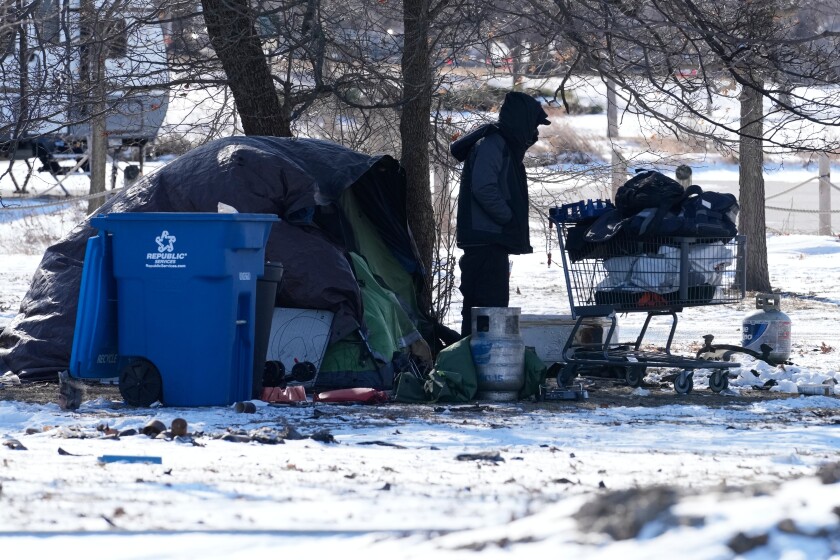
In March 2024, Johnson’s plan to raise the transaction tax on high-end property sales, aimed at generating $100 million annually to combat homelessness, was rejected by 54% of Chicago voters. The referendum faced significant opposition, with business and real estate interests spending $2 million to defeat the proposal, which targeted transactions exceeding $1 million.
Despite the setback, Johnson expressed optimism following the defeat, stating that there remain “a lot more yeses” in neighborhoods most impacted by the housing crisis. He acknowledged the need to engage and educate voters who may not have been directly affected by the issue. Pacione-Zayas echoed this sentiment, noting that a more robust educational campaign is crucial for future efforts.
Challenges Ahead for Johnson’s Administration
Pacione-Zayas criticized the disinformation tactics employed during the campaign, which she claims misled voters into believing the mayor would increase their property taxes. She referenced a similar situation where a campaign funded by billionaire businessman Ken Griffin thwarted Governor JB Pritzker’s attempt to amend the Illinois Constitution for a graduated income tax.
“Sometimes, these things are confusing to people,” Pacione-Zayas remarked. “Because there historically has been mistrust in government, you’re definitely at a disadvantage in terms of the messaging campaign.”
The city’s five-year strategy to address homelessness reiterates the necessity of pursuing the referendum. “The big finding in the way we address homelessness is making sure that we have affordable housing and the resources to provide wrap-around support for those experiencing homelessness,” she explained. “To achieve that, you need to have revenue and ideally a dedicated revenue stream.”
Political Landscape and Future Strategies
This push comes on the heels of a challenging budget season, where a coalition of conservative and moderate alderpersons took control of the budget process for the first time in decades. This shift has strained relations between Johnson and an empowered City Council, particularly after the tactics used by the Chicago Teachers Union to influence alderpersons who opposed the corporate head tax.
While Pacione-Zayas clarified that Johnson, a former organizer for the union, does not control the group that supported his campaign, she acknowledged the new dynamics affecting the city’s governance. She compared the recent budget battles in Chicago to those that occur annually in Springfield, where lawmakers often receive thousands of pages of budget proposals just hours before critical votes.
“We’re in a very different time. We have a very different Council,” she stated. “External forces in the federal government put additional pressure on how elected officials advocate for their constituents.”
Pacione-Zayas emphasized that the responsibility for cooperation lies with all parties involved. “The onus is not on the mayor. The onus is on all parties to work collaboratively in service of the people of Chicago,” she concluded.
As the Johnson administration prepares for another attempt to pass the referendum, the focus will be on addressing the concerns of voters and building a campaign that effectively communicates the benefits of the proposed tax.
















