









































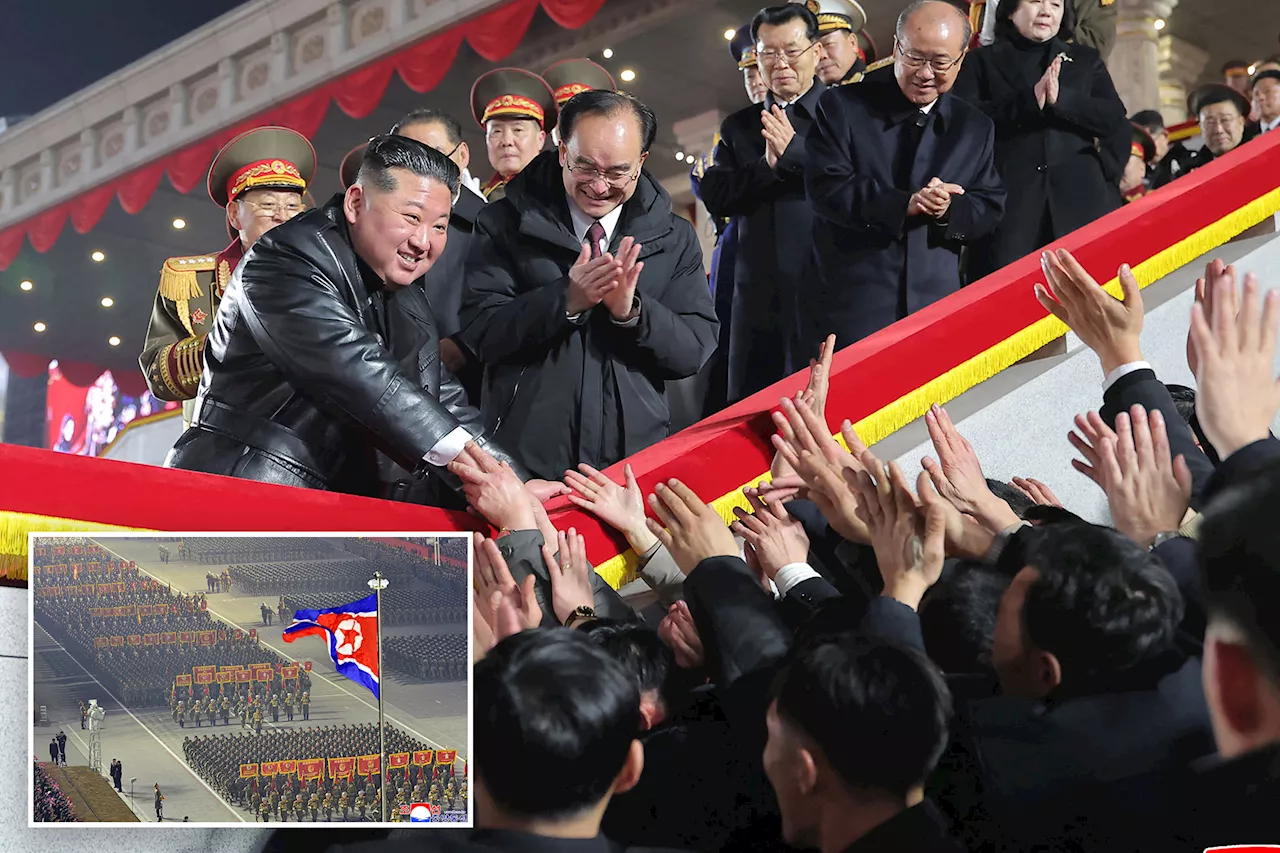
North Korean leader Kim Jong Un is intensifying his rhetoric against South Korea while increasingly featuring his daughter, Kim Ju Ae, in public events. This development fuels speculation about her potential role as a successor to her father. The recent Ninth Congress of the ruling Workers’ Party in Pyongyang marked a significant moment, as Kim Jong Un labeled South Korea the “most hostile enemy,” dismissing its attempts at reconciliation and warning of arbitrary actions in response to what he termed “obnoxious behavior.”
During the congress, Kim described the South’s conciliatory approach as deceptive, signaling a hardening stance against any diplomatic overtures. His comments, reported by the state-controlled Korean Central News Agency (KCNA), emphasized North Korea’s commitment to expanding its nuclear capabilities. The congress served as a platform for Kim to announce plans for the development of advanced weaponry, including intercontinental ballistic missiles capable of underwater launches and artificial intelligence-driven systems.
Kim Jong Un’s statements highlighted a dual approach: North Korea is prepared for either peaceful coexistence or ongoing confrontation, making it clear that the choice of how to proceed lies not with South Korea. This rhetoric underscores the regime’s readiness to escalate tensions further.
Public appearances by Kim Ju Ae, who is around 13 or 14 years old, have drawn significant attention. She recently attended a military parade in Pyongyang, standing prominently beside her father and senior military officials. Reports from South Korean media suggest that Kim Jong Un has given her a leadership role in the regime’s Missile Administration, which oversees the country’s nuclear forces. This timing and her visible involvement in strategic areas suggest a deliberate effort to position her as a key figure within the regime, potentially as her father’s successor.
The congress also provided insights into North Korea’s military ambitions. According to estimates from the Stockholm International Peace Research Institute, North Korea possesses approximately 50 nuclear warheads and has enough fissile material to produce an additional 40. Kim’s statements during the congress reaffirmed the country’s intention to enhance its nuclear arsenal, as the military parade showcased the advancements being pursued by the regime.
The emphasis on military capabilities, including underwater-launched ICBMs and drones, reflects North Korea’s determination to develop advanced technologies. This ongoing display of military strength serves as a message to both allies and adversaries regarding its current capabilities and future ambitions.
The combination of Kim Jong Un’s aggressive posture toward South Korea, the emerging role of Kim Ju Ae, and the regime’s clear focus on advanced weaponry signals a period of heightened tensions in the region. The potential for a significant shift in leadership dynamics, alongside an unwavering commitment to military enhancement, poses challenges for diplomatic efforts aimed at stabilizing relations on the Korean Peninsula.
















