









































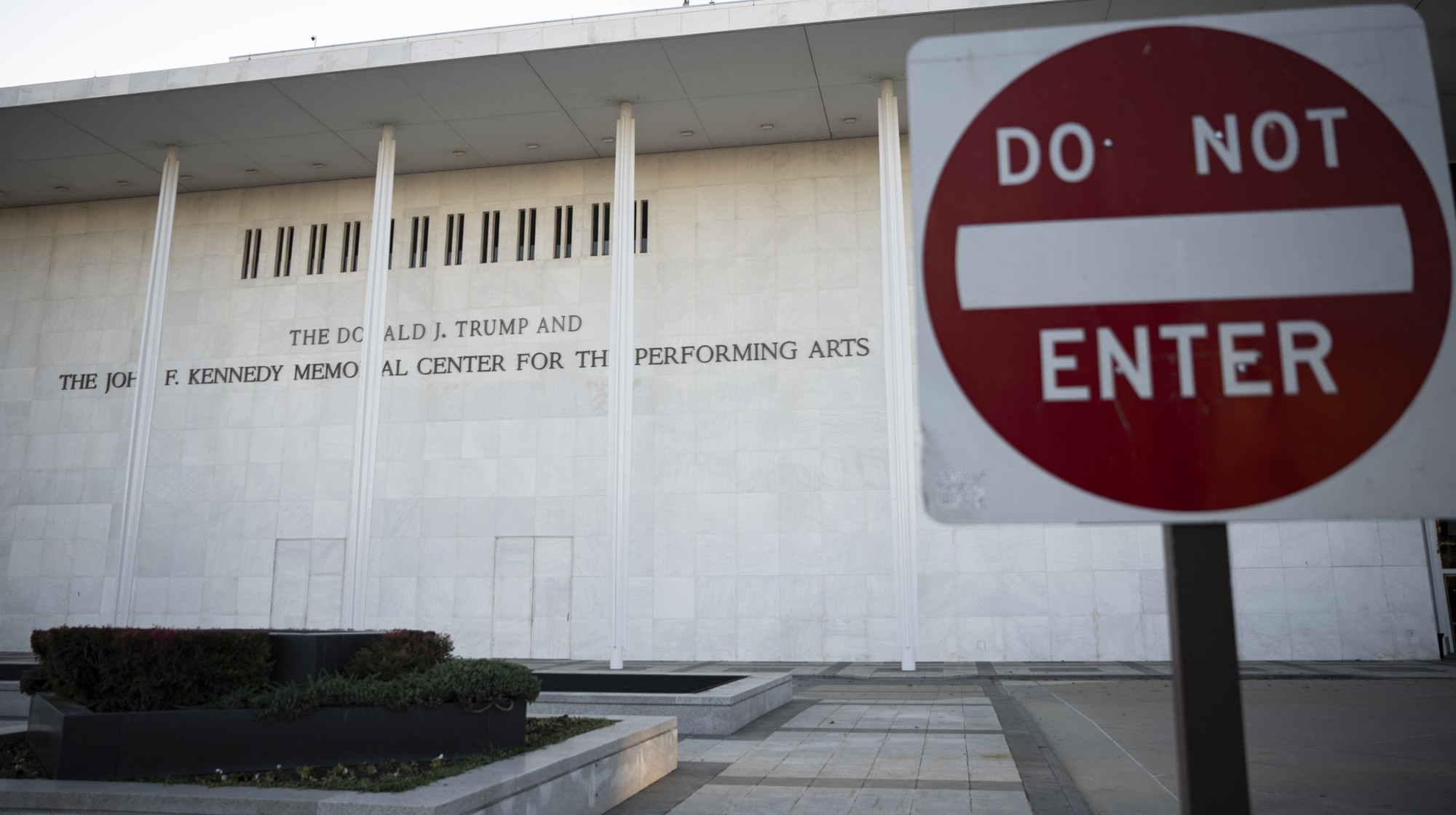
The John F. Kennedy Center for the Performing Arts is experiencing significant turmoil following its mid-December decision to add former President Donald Trump‘s name to the iconic venue. This move, aimed at showcasing “unequivocal bipartisan support for America’s cultural center for generations to come,” according to Vice President for Public Relations Roma Daravi, has resulted in a series of high-profile cancellations by artists.
In the weeks following the name change, the Kennedy Center has seen a notable decline in performances. Notably, jazz band The Cookers canceled their two previously promoted New Year’s Eve performances. This decision, alongside the earlier cancellation of the center’s annual Christmas Eve Jazz concert, has intensified the backlash against the institution, as reported by The New York Times. The impact is palpable, as artists publicly link their cancellations to the center’s rebranding.
Musician Chuck Redd, who has hosted the holiday “Jazz Jams” since 2006, expressed his dismay upon seeing the name change on the Kennedy Center website. Redd stated to the Associated Press, “With the latest act of Donald J. Trump renaming the Center after himself, we can no longer permit ourselves nor ask our audiences to step inside this once great institution.”
Ongoing Artist Reactions
The cancellations continue to mount. On January 2, Doug Varone and the Dancers announced they would not proceed with an upcoming April performance, citing the same concerns as other artists. Varone articulated on Instagram that the new name has compromised the integrity of the venue. He referred to it as a “once great institution” that has now become a personal platform for Trump.
This latest wave of cancellations follows a previous backlash earlier in the year, when various artists distanced themselves from the Kennedy Center after Trump named himself the institution’s chairman. According to the Los Angeles Times, these actions by artists are viewed as more than mere symbolic gestures; they represent significant professional and financial risks.
Musician Kristy Lee highlighted the financial implications of her cancellation, stating, “This is how I keep the lights on. But losing my integrity would cost me more than any paycheck.” Such sentiments reflect the deep-rooted concerns among artists regarding the political implications of the Kennedy Center’s decisions.
Legal Threats and Accusations
The wave of cancellations has elicited a strong reaction from Kennedy Center President Richard Grenell, a close ally of Trump. Grenell threatened to pursue a $1 million lawsuit against Redd, describing the decision to cancel performances as “classic intolerance” and indicative of “sad bullying tactics employed by certain elements on the left.”
In a letter obtained by ABC News, Grenell stated that Redd’s cancellation had caused considerable financial losses. He claimed, “Your dismal ticket sales and lack of donor support, combined with your last-minute cancellation, has cost us considerably.” The Kennedy Center plans to move forward with the lawsuit after the holiday season, further escalating tensions between the institution and the artistic community.
Grenell’s comments have been met with criticism. Observers argue that his statements shift the focus away from the initial renaming decision, which triggered the backlash. By labeling dissenting artists as extremists, Grenell attempts to divert attention from the actions that set the controversy in motion.
As the Kennedy Center navigates this challenging landscape, the ramifications of its decision to include Trump’s name remain a pressing issue. The fallout from the name change continues to ripple through the artistic community, with many performers weighing their options in the face of political affiliations that now overshadow the venue’s storied legacy.
















