









































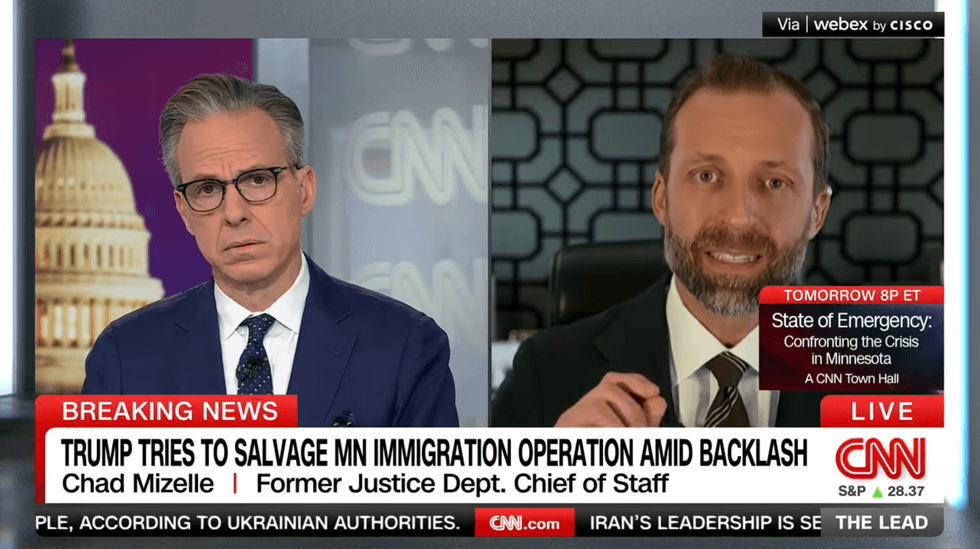
CNN anchor Jake Tapper engaged in a heated debate with former Trump administration official Chad Mizelle regarding the shooting of 37-year-old nurse Alex Pretti by immigration agents in Minneapolis. The discussion raised significant questions about accountability and the role of law enforcement in the incident, spotlighting broader issues concerning immigration policies and civil rights.
During the segment, Tapper questioned Mizelle about the circumstances surrounding Pretti’s death. Mizelle, who previously served as chief of staff at the Department of Justice and as general counsel at the Department of Homeland Security, attempted to deflect blame onto Minnesota officials, particularly Governor Tim Walz. Mizelle asserted that the state’s criticism of Immigration and Customs Enforcement (ICE) has contributed to a climate of agitation that could lead to tragic outcomes, such as the one that befell Pretti.
Mizelle stated, “If you want to lay blame at somebody’s feet, it is squarely on Tim Walz and the Minnesota officials who have called ICE the modern-day Gestapo.” He argued that the rhetoric used by local officials has encouraged protests against ICE, which he believes has exacerbated tensions.
Tapper challenged Mizelle’s stance, emphasizing the importance of First Amendment rights. He pointedly asked, “So you have an issue with the First Amendment? You don’t think that people should be exercising their First Amendment rights to speak about policies that they don’t like?” This exchange highlighted a stark contrast between Tapper’s defense of civil liberties and Mizelle’s focus on law enforcement’s challenges.
As the conversation progressed, Tapper confronted Mizelle about his implication that Pretti bore some responsibility for his death. Mizelle attempted to clarify his argument, stating, “I didn’t say that at all, Jake, but what you are trying to…” Tapper interjected, reiterating his concern that Mizelle’s remarks suggested a victim-blaming narrative.
The exchange escalated as Tapper pressed Mizelle on the broader implications of the incident. He referenced the January 6, 2021, attack on the U.S. Capitol and remarked on the perceived double standards in responses to violence, questioning why similar leniency was not afforded to individuals like Pretti. “It seems to be that people in the Trump administration… think that there’s one set of rules for Trump supporters and another set of rules for people who are not Trump supporters,” Tapper stated.
This fiery confrontation underscored the contentious nature of immigration policies under the Trump administration and how these policies continue to polarize public discourse. The incident involving Pretti has sparked protests and calls for accountability, drawing attention to the actions of immigration enforcement agencies and their impact on local communities.
The discussion concluded with Tapper reiterating the need for uniform standards in law enforcement, regardless of the political affiliations of those involved. His comments resonated with viewers who have expressed concern about the ongoing implications of immigration policies and the treatment of individuals by law enforcement agencies.
As the nation grapples with issues surrounding immigration, accountability, and civil rights, the exchange between Tapper and Mizelle serves as a reminder of the complexities and human consequences involved in these discussions.
















