









































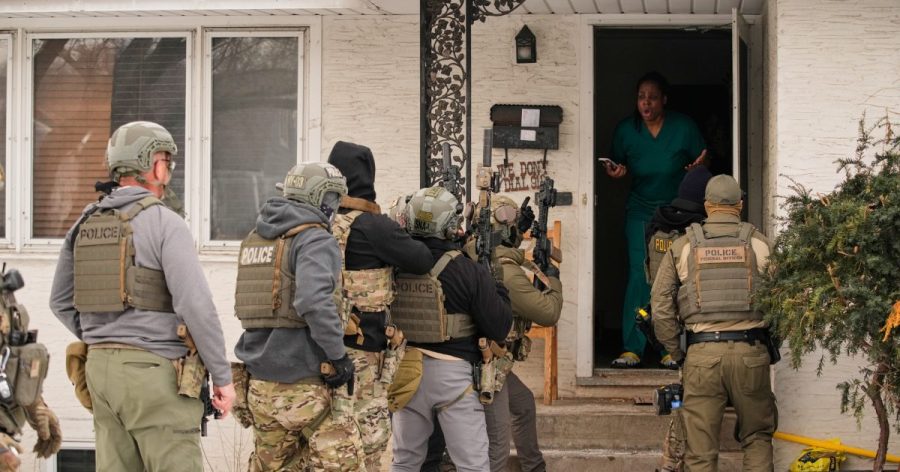
U.S. Immigration and Customs Enforcement (ICE) officers have reportedly been instructed to assume broad authority to enter residential properties without obtaining a judge’s warrant, according to a memo that has raised significant concerns. New recruits and those currently undergoing training have been directed to adhere to this memo’s guidance, which contradicts prior training materials emphasizing the need for judicial oversight.
The memo, issued earlier in July 2023, outlines a controversial shift in ICE’s operational protocols. Specifically, it asserts that agents may conduct home entries based on their assessments of the situation, significantly broadening their discretionary power. This directive has sparked a debate about the implications for civil liberties and the potential for abuse of power.
Concerns Over Legal and Ethical Implications
Legal experts and civil rights advocates have expressed alarm regarding the memo’s directives. Critics argue that allowing ICE officers to bypass judicial oversight undermines constitutional protections against unreasonable searches. The lack of a warrant requirement could lead to increased encounters that infringe on the rights of individuals, particularly in communities that already feel vulnerable to aggressive enforcement practices.
The U.S. Department of Homeland Security (DHS) has faced scrutiny over its immigration policies in recent years, with various groups advocating for reforms that prioritize humane treatment and due process. This latest development is viewed as a regression from those principles, prompting calls for accountability and a review of ICE’s operational guidelines.
Training Discrepancies and Operational Impact
Compounding the issue, reports suggest that the training materials previously provided to ICE personnel explicitly state the necessity of obtaining a warrant before entering a home. The conflicting guidance creates confusion among officers and raises questions about the integrity of the training process. Critics argue that it may lead to inconsistent application of the law and potentially harmful interactions with the public.
The memo emphasizes adherence to its directives over established training protocols, effectively steering new hires toward a more aggressive enforcement posture. This shift may have far-reaching implications for communities across the United States, particularly those with significant immigrant populations.
The debate surrounding ICE’s authority to conduct home entries without warrants is only expected to intensify as advocacy groups and legal experts mobilize against what they perceive as an encroachment on civil liberties. As the situation unfolds, the impact of this memo on both ICE operations and community relations will be closely monitored by various stakeholders, including lawmakers, civil rights organizations, and the public.
The implications of this policy change are profound, and observers are urging a re-examination of ICE’s operational standards to ensure they align with constitutional protections.
















