
































The recent directive from Secretary of Defense Pete Hegseth to cancel official observances of “cultural awareness” months within the military has raised significant concerns about the implications for American history and its representation. This decision particularly affects the legacy of Milton Olive III, who was the first Black American soldier to be awarded the Medal of Honor for his service during the Vietnam War. Tragically, Olive did not live long enough to receive the medal in person, having made the ultimate sacrifice at the age of 18 on October 22, 1965.
As Olive and his platoon pursued a group of Viet Cong near Saigon, they encountered enemy fire. When an enemy grenade was thrown into their midst, Olive demonstrated extraordinary heroism by grabbing the grenade and shielding his fellow soldiers from the blast with his own body. His citation for the Medal of Honor states, “Pfc. Olive’s extraordinary heroism, at the risk of his life above and beyond the call of duty, are in the highest traditions of the U.S. Army.”
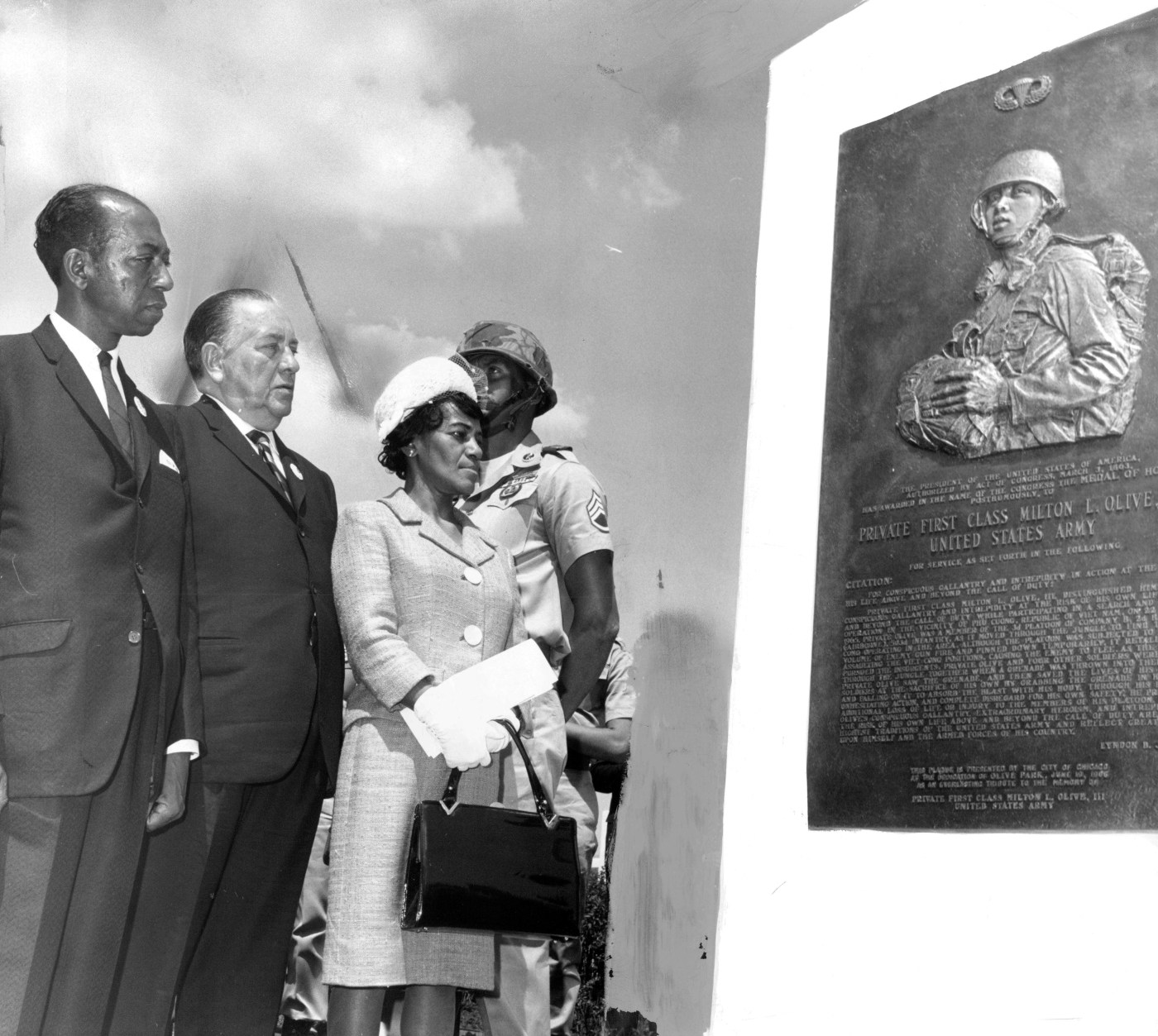
On April 21, 1966, President Lyndon B. Johnson presented the Medal of Honor to Olive’s parents, and later that year, a monument in his honor was unveiled in Chicago at Olive Park, close to Navy Pier. When the author moved to Chicago in 1969, Olive’s sacrifice remained a topic of discussion and reverence. Although he was never drafted to serve in Vietnam, the memory of Olive inspired him during his own draft board experiences.
The importance of recognizing figures like Olive grows increasingly vital as political movements challenge concepts of diversity, equity, and inclusion. Earlier this year, Hegseth’s directive to the Department of Defense (DoD) led to the removal of mentions of historically significant American military figures from the department’s website. This included notable groups such as the Tuskegee Airmen and the Navajo Code Talkers, whose contributions to American freedom were significant yet were summarily dismissed due to their identities as minorities.
In addition to these omissions, observances such as Black History Month, Women’s History Month, Pride Month, and National Hispanic Heritage Month were also eliminated under Hegseth’s orders, raising questions about the rationale behind this decision. Notably, investigative reporter Sig Christenson from the San Antonio Express-News reported that no clear justification was provided for the bans, particularly in contrast to the continued recognition of events like St. Patrick’s Day.
The author, who identifies as Black and embraces Chicago’s diverse culture, reflects on the significance of such celebrations. He has also discovered through 23andMe that he is approximately 19% Irish, underscoring the multifaceted nature of American identity. The remark by musician John Mellencamp resonates: “Ain’t that America?”
Veteran and author C. Douglas Sterner, who has dedicated his work to documenting the stories of Medal of Honor recipients, expressed profound disappointment over the DoD’s actions. He collaborated on a new book titled “Beyond Woke: The Diversity of U.S. Military Heroes,” which aims to highlight the contributions of women and ethnic minorities in the military. The cover of the book features Olive in the act of saving his comrades, symbolizing his enduring legacy in the hearts of the nation.
As discussions around Hegseth’s directive continue, it is crucial to remember the sacrifices of individuals like Milton Olive III. Their stories not only enrich the tapestry of American history but also serve as reminders of the values of bravery and selflessness that define the nation’s military heritage.