









































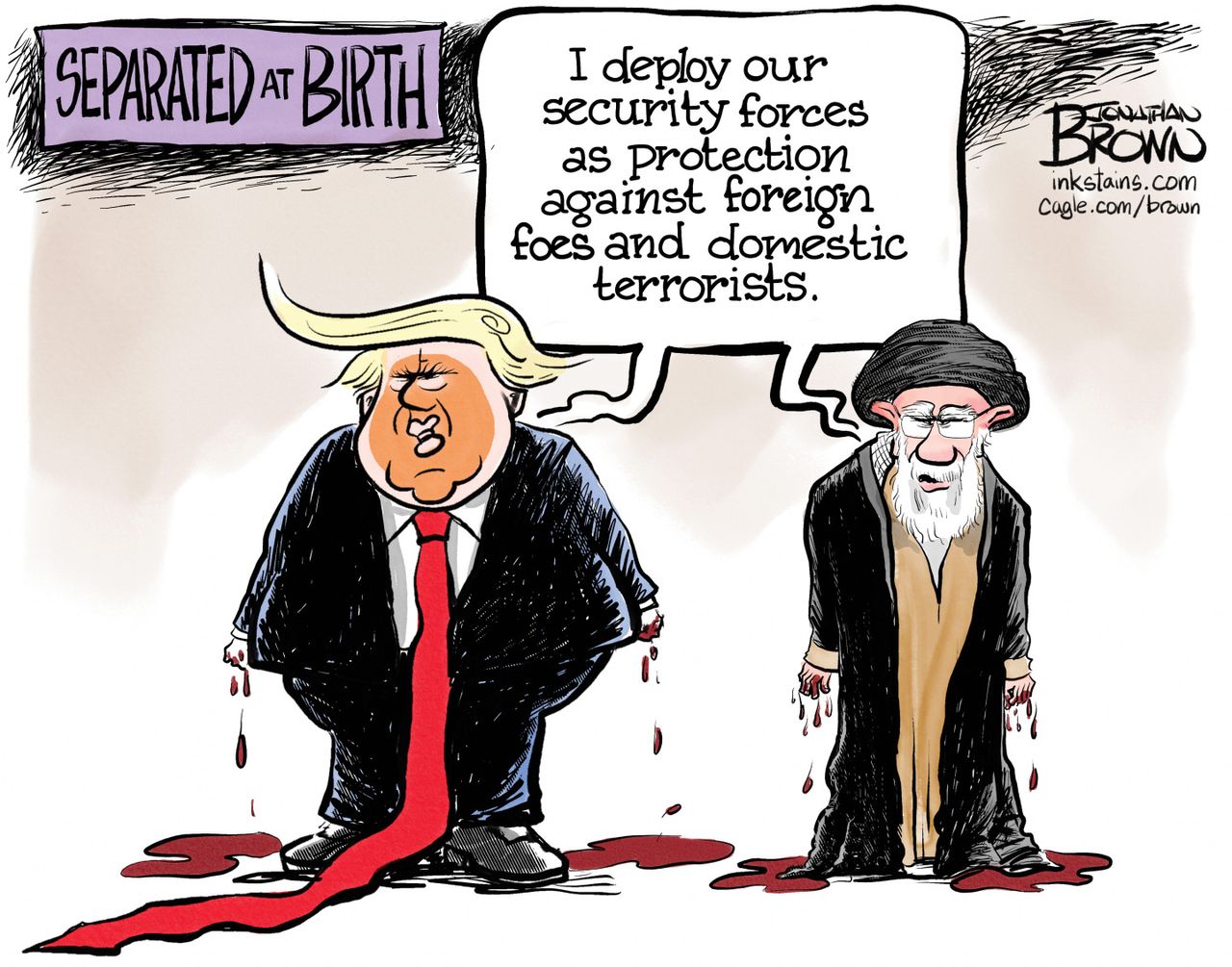
The ongoing crackdown on protesters in Iran has sparked outrage worldwide, prompting artists to express their condemnation through powerful political cartoons. These works highlight the severity of the situation, characterized by violent government responses to civilians demanding change. The illustrations serve not only as commentary but also as a reminder of the struggle for human rights in the country.
Art as Protest
Prominent cartoonists such as Jonathan Brown and Graeme MacKay have utilized their platforms to shed light on the brutal realities faced by demonstrators in Iran. Their illustrations capture the tension and urgency surrounding the protests, conveying messages that resonate with global audiences. The cartoons depict scenes of conflict, illustrating both the courage of the protesters and the oppressive actions of the government.
Another notable contribution comes from Gary Varvel, whose poignant imagery challenges viewers to confront the harsh realities of civil rights violations. His work emphasizes the need for international awareness and support for those fighting for justice in Iran. The striking visuals not only provoke thought but also inspire solidarity among those who believe in the fundamental rights of individuals.
Visions of Resistance
The power of political cartoons lies in their ability to communicate complex issues in an accessible manner. Artists like Clay Jones and Nick Anderson have crafted compelling narratives through their artwork, effectively encapsulating the emotions and turmoil experienced by the Iranian people. These illustrations serve as a form of resistance, asserting that the voices of the oppressed cannot be silenced.
The global response to these cartoons has been significant, with many urging for increased pressure on the Iranian government to respect the rights of its citizens. As the situation evolves, the role of these artists becomes increasingly vital. Their work not only raises awareness but also fosters a dialogue about the importance of freedom and democracy.
In conclusion, the political cartoons addressing the crackdown on protesters in Iran provide a critical lens through which to understand the broader implications of state violence against civilians. As artists continue to respond to these events, their contributions will be essential in shaping public perception and advocating for change. The fight for justice in Iran remains a poignant reminder of the resilience of those who dare to speak out against oppression.
















