





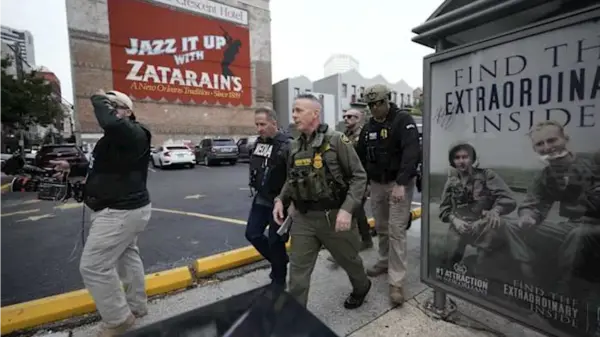

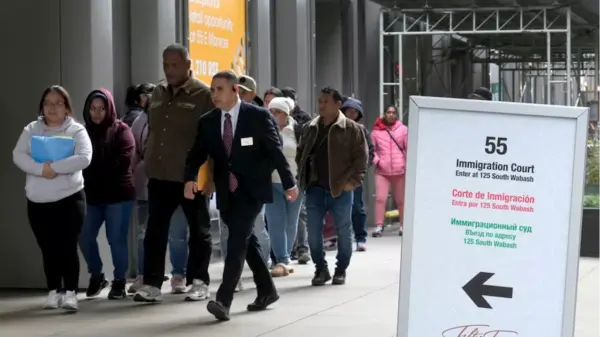

























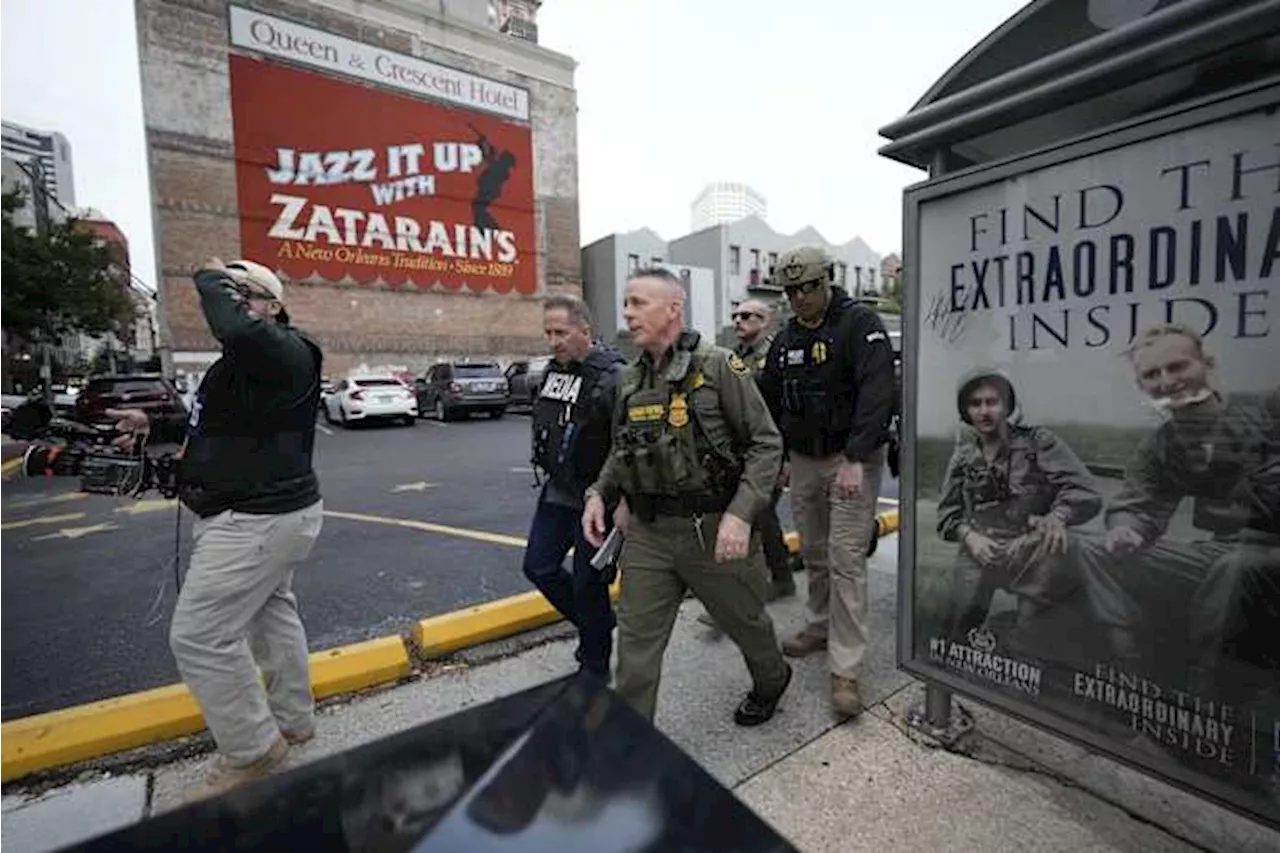
Federal agents have launched a significant immigration operation in New Orleans and surrounding suburbs, named ‘Catahoula Crunch’, which is expected to last for two months. This initiative has already led to numerous arrests and has ignited widespread protests among local officials and immigrant rights advocates. Concerns are rising that the operation will indiscriminately target a broad population rather than focusing solely on violent offenders, potentially destabilizing families and impacting the local economy.
The operation follows a similar crackdown in Chicago, where more than 4,000 individuals were arrested, most of whom reportedly had no criminal records. In New Orleans, officials have expressed skepticism about the federal government’s claims regarding the number of violent criminals in the area. J. P. Morrell, President of the New Orleans City Council, stated, “There is no rational basis that a sweep of New Orleans or the surrounding parishes would ever yield anywhere near 5,000 criminals, let alone ones that are considered ‘violent’ by any definition.”
According to data from the U.S. Census Bureau, the New Orleans metropolitan area had a foreign-born population of nearly 100,000 residents last year, with just under 60% not being U.S. citizens. Morrell emphasized that the level of violent crime attributed to illegal immigrants is minimal, noting that crime rates in New Orleans are currently at historic lows.
Agents from Customs and Border Protection and U.S. Immigration and Customs Enforcement (ICE) have begun their operations in marked and unmarked vehicles, conducting arrests in various locations, including parking lots of home improvement stores. Activist Alejandra Vasquez, who manages a social media account tracking the movements of federal agents, reported a surge of messages from concerned residents since the operation commenced. “My heart is so broken,” Vasquez shared. “They came here to take criminals and they are taking our working people. They are not here doing what they are supposed to do. They are taking families.”
The operation has garnered support from some local politicians, including Mike Johnson, the U.S. House Speaker from Louisiana. Johnson argued that “Democrats’ sanctuary city policies have failed — making our American communities dangerous. The people of our GREAT city deserve better, and help is now on the ground,” he posted on social media.
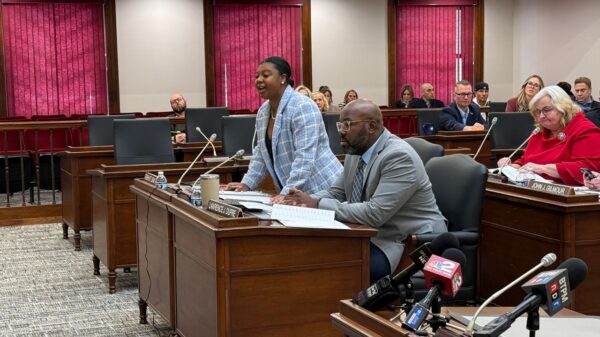
Tensions flared during a recent City Council meeting, where about two dozen protesters were forcibly removed after chanting “Shame.” Police intervened, leading to a chaotic scene as officers escorted demonstrators out of the building. The operation’s framework is designed to extend throughout southeast Louisiana and into Mississippi, according to statements made by the Department of Homeland Security.
Homeland Security spokesperson Tricia McLaughlin asserted that the operation aims to detain immigrants who were released after being arrested for serious crimes, indicating that “in just 24 hours on the ground, our law enforcement officers have arrested violent criminals with rap sheets that include homicide, kidnapping, child abuse, robbery, theft, and assault.” Despite these claims, details on the total number of arrests made thus far have not been disclosed by immigration officials.
Local representatives fear that the focus on a larger group of individuals will lead to the apprehension of non-violent residents. Lesli Harris, another City Council member, remarked, “There are nowhere near 5,000 violent offenders in our region whom Border Patrol could arrest. What we’re seeing instead are mothers, teenagers, and workers being detained during routine check-ins, from their homes and places of work.”
Recent data analyzed by the University of California Berkeley Deportation Data Project revealed that in the Chicago crackdown, of approximately 1,900 individuals arrested in the early weeks of the operation, nearly 300 had criminal convictions, primarily for non-violent offenses.
New Orleans, known for its vibrant culture shaped by a blend of French, Spanish, African, and Native American influences, has recently seen an influx of immigrants from Central and South America as well as Asia. Statewide, there are more than 145,000 foreign-born noncitizens in Louisiana, and Pew Research Center estimates about 110,000 of those are undocumented as of 2023.
The ongoing operation underscores the contentious nature of immigration enforcement in the United States, where local communities grapple with the implications of federal policies on their residents’ lives and livelihoods.