









































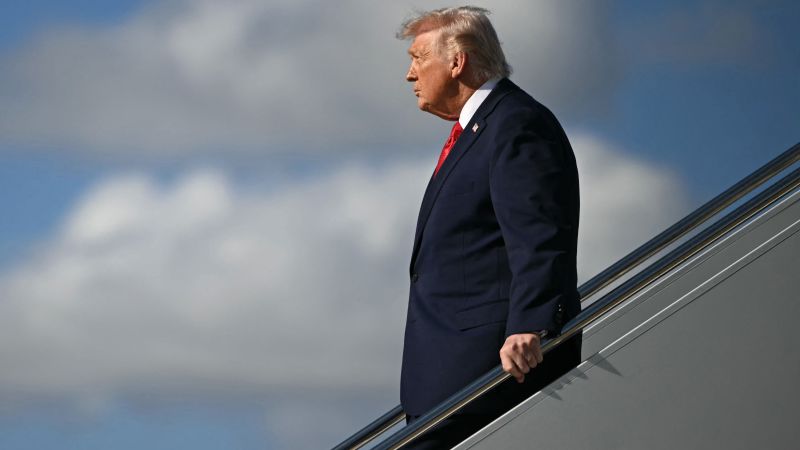
Tensions are rising between Europe and the United States as President Donald Trump continues to assert his controversial claims over Greenland, a semiautonomous territory of Denmark. European leaders now grapple with how to respond to Trump’s assertive negotiating tactics, which many argue have strayed far from traditional diplomatic norms. The implications extend beyond Greenland, raising questions about the future of NATO and transatlantic relations.
The situation escalated after Trump expressed a desire to acquire Greenland, a notion that Danish officials firmly rejected. Rasmus Jarlov, a member of the Danish parliament, emphasized the seriousness of the U.S. demands, stating, “We can never give in to a demand that we should just hand over land and people that the United States has absolutely no right to.” As tensions mount, European leaders are considering a range of responses, from trade retaliation to potential boycotts of events like the upcoming FIFA World Cup, which Trump is expected to attend.
As the standoff continues, Trump’s negotiating style has drawn criticism. His approach often disregards established diplomatic protocols, making it difficult for European leaders to engage with him on a factual basis. Trump’s claims about Greenland being vulnerable to threats from Russia or China lack credibility, as the island is already protected under NATO agreements. The U.S. has access to Greenland for military operations, which raises questions about the necessity of his demands.
European officials are alarmed by the potential implications of Trump’s actions for the future of the Western alliance. They worry that he may not view NATO’s stability as a priority in pursuit of his ambitions. A previous government shutdown in the U.S. showcased Trump’s willingness to prioritize his goals over the well-being of federal workers and citizens reliant on government support. The risk for NATO members is that Trump might be willing to overlook its significance in favor of a larger geopolitical advantage.
Efforts by European leaders to appeal to Trump’s sense of morality and international law have proven largely ineffective. Lars Løkke Rasmussen, Denmark’s Foreign Minister, publicly addressed Trump, urging him to respect established lines of diplomacy and sovereignty. His statement underscored the need for a unified European response to Trump’s provocations, yet it remains unclear whether such approaches will resonate with the U.S. president.
In light of these challenges, some European officials have suggested adopting a more assertive stance. Emmanuel Macron, the President of France, reportedly encouraged the European Union to activate its trade measures to counter U.S. pressure. The idea of leveraging trade relationships is gaining traction, as the EU and the U.S. share one of the largest trade partnerships globally. A disruption in this relationship could have significant economic repercussions for both sides.
As Trump continues to assert his influence on international relations, the prospect of a full-blown trade war looms large. European leaders are concerned that such a conflict could destabilize NATO and undermine decades of cooperation. Given Trump’s history of leveraging tariffs and trade policies, the potential for a showdown is increasing as European nations contemplate their next steps.
The question remains: will Europe adopt a more aggressive strategy to counter Trump’s demands? The balance of power in transatlantic relations hangs in the balance, with leaders facing the daunting task of navigating a president who operates outside conventional political frameworks. As the situation unfolds, the hope persists that a diplomatic solution can be reached without escalating tensions further.
In the words of Shakespeare’s Hamlet, “you cannot speak of reason to the Dane and lose your voice.” European leaders are discovering that negotiating with Trump requires a recalibration of their diplomatic strategies, as they seek to protect their sovereignty and maintain the integrity of international alliances.
















