









































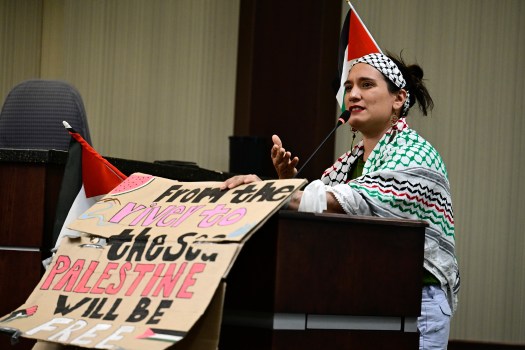
A Boulder-area activist, Laura Gonzalez, has filed a motion to dismiss charges against her, claiming that the prosecution infringes on her First Amendment rights. Gonzalez is facing serious allegations, including one count of felony retaliation against Boulder City Councilmember Matt Benjamin, as well as misdemeanor harassment charges. The case is being prosecuted by the 1st Judicial District, which oversees Jefferson and Gilpin counties due to its involvement with an elected official.
Gonzalez’s attorney, Cameron Bedard from the Denver-based firm Rights & Liberties Law, argues that the charges stem from Gonzalez’s outspoken criticism of Boulder’s refusal to endorse a ceasefire resolution related to ongoing military actions in Gaza. The motion, filed on March 27, 2025, emphasizes that the case centers on political expression, stating, “This prosecution targets core political expression.”
Gonzalez has gained attention for her vocal presence at Boulder City Council meetings, particularly during the summer of 2024. Her protests were motivated by the council’s decisions regarding investments in companies perceived to be complicit in the conflict in Gaza. The situation escalated during a council meeting in August 2025, leading to Gonzalez receiving a one-year suspension from attending in-person sessions.
The allegations against Gonzalez include a confrontation with Councilmember Benjamin and his wife at a local farmer’s market on September 3, 2025. The arrest affidavit states that during this incident, Gonzalez allegedly shoulder-bumped Benjamin’s wife and made inflammatory remarks toward Benjamin. The defense does not contest the occurrence of the confrontation but challenges the characterization of the physical contact involved.
In addition to the charges stemming from the farmer’s market incident, another charge arose from Gonzalez’s protests outside the Penfield Tate II Municipal Building on August 21, 2025. Following her suspension, she continued to voice her critique of the council’s policies regarding Gaza, using a megaphone and carrying signs to draw attention to the humanitarian crisis.
The defense asserts that while Gonzalez’s statements may have been offensive to some, they are legitimate political critiques made in a public forum. “They do not constitute ‘true threats’ or ‘fighting words’ under any constitutional definition,” the motion states, referring to legal precedents that protect political discourse.
Both Benjamin and fellow protester Rachel Amaru declined to comment on the ongoing case. The defense’s argument also relies on a 1993 Colorado Supreme Court ruling, which specifies that harassment must involve words that incite unlawful conduct or provoke a breach of the peace. The defense maintains that Gonzalez’s expressions do not meet this threshold and should be protected under the First Amendment.
A spokesperson for the 1st Judicial District, Brionna Boatright, refrained from discussing the specifics but emphasized the need to differentiate between protected speech and illegal conduct. “Peaceful protest and dissent are fundamental First Amendment rights that do not extend to conduct alleged to cross legal lines,” she stated in an email.
As the legal proceedings continue, Gonzalez is requesting a hearing on her motion if the court does not rule in her favor. A motions hearing is scheduled for April 9, 2025, followed by a jury trial set to begin on June 8, 2025. The outcome of this case could have significant implications for the intersection of activism and free speech within the legal framework.
















