





































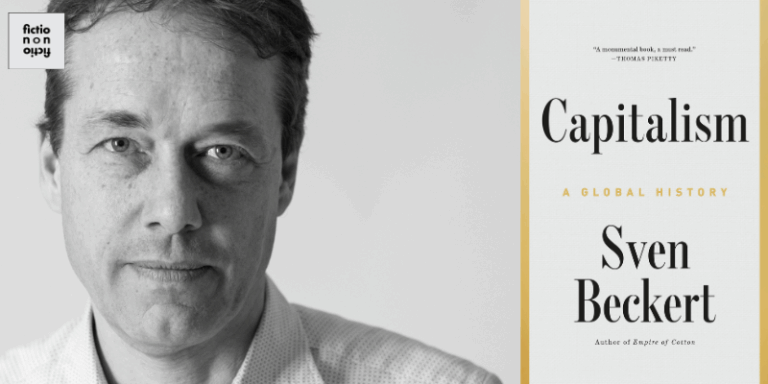
Pulitzer Prize finalist Sven Beckert recently discussed his new book, Capitalism: A Global History, with co-hosts Whitney Terrell and V.V. Ganeshananthan. The conversation delved into capitalism as a transformative force, influencing daily life and interactions across the globe. Beckert framed capitalism not just as an economic system but as an ongoing process with significant implications, comparable to geological forces.
Beckert’s examination spanned the past millennium, highlighting the roles played by various figures, from merchants to CEOs and activists resisting oppression. He articulated how capitalism has shaped societies, impacting technological innovation and revolution, while also acknowledging its often devastating global consequences.
Understanding Capitalism’s Evolution and Inequality
A major theme of the discussion centered on the relationship between capitalism and inequality. Beckert argued that capitalism is a human-made construct, shaped by the actions and decisions of people worldwide. He emphasized that understanding capitalism requires acknowledging its complexity and the varying forms of inequality it has produced over time.
Beckert pointed out that while inequality is not exclusive to capitalism, the system has historically concentrated wealth in the hands of a few. He referenced a significant period between 1880 and 1914, during which the top decile of citizens in countries like France, Britain, and Sweden controlled 80 to 90 percent of national wealth. Such historical patterns highlight that wealth concentration has occurred before and can change.
During the podcast, co-host Ganeshananthan raised concerns about the impact of artificial intelligence (AI) on the labor market. Beckert acknowledged the anxieties surrounding AI but suggested that looking back at capitalism’s history could provide valuable insights. He noted that technological advancements have led to productivity gains throughout history, citing examples like the steam engine and the automobile.
He pointed out that while these innovations often result in increased productivity, the critical question remains: “Who benefits from these gains?” Beckert contrasted the widespread distribution of productivity gains in the 1950s and 1960s in the United States with the more uneven distribution observed following the computer revolution in the early 2000s.
The Future of Capitalism: Opportunities and Challenges
Beckert emphasized that the future of capitalism is not predetermined. He argued that the rise of AI could either exacerbate existing inequalities or provide opportunities for a more equitable society. He noted that AI might allow for a reduction in working hours and an increase in overall wealth, contingent on how society decides to distribute the benefits.
In a thought-provoking moment, he remarked, “The future is open, and there are various futures possible at any given moment.” This sentiment resonated with Terrell, who highlighted the historical context of wealth concentration, suggesting that similar shifts could occur again.
Beckert concluded on an optimistic note, reminding listeners that the United States, despite its challenges, is one of the wealthiest societies in history. He stressed the potential to address pressing social issues, such as hunger and access to education and healthcare, underscoring the notion that material solutions are within reach.
Reflecting on the broader implications of capitalism, Beckert argued that the current moment presents an opportunity for societal transformation. He encouraged listeners to recognize that the dynamics of capitalism are not immutable and called for a reevaluation of how wealth and resources are distributed in society.
The engaging conversation left listeners with much to contemplate regarding the future of capitalism, technology, and inequality. For those interested in exploring these themes further, Beckert’s book provides a comprehensive analysis of capitalism’s global history and its ongoing impact on society.
To listen to the full episode, subscribe through platforms such as iTunes, Google Play, Stitcher, and Spotify, or stream directly from the podcast’s website.