









































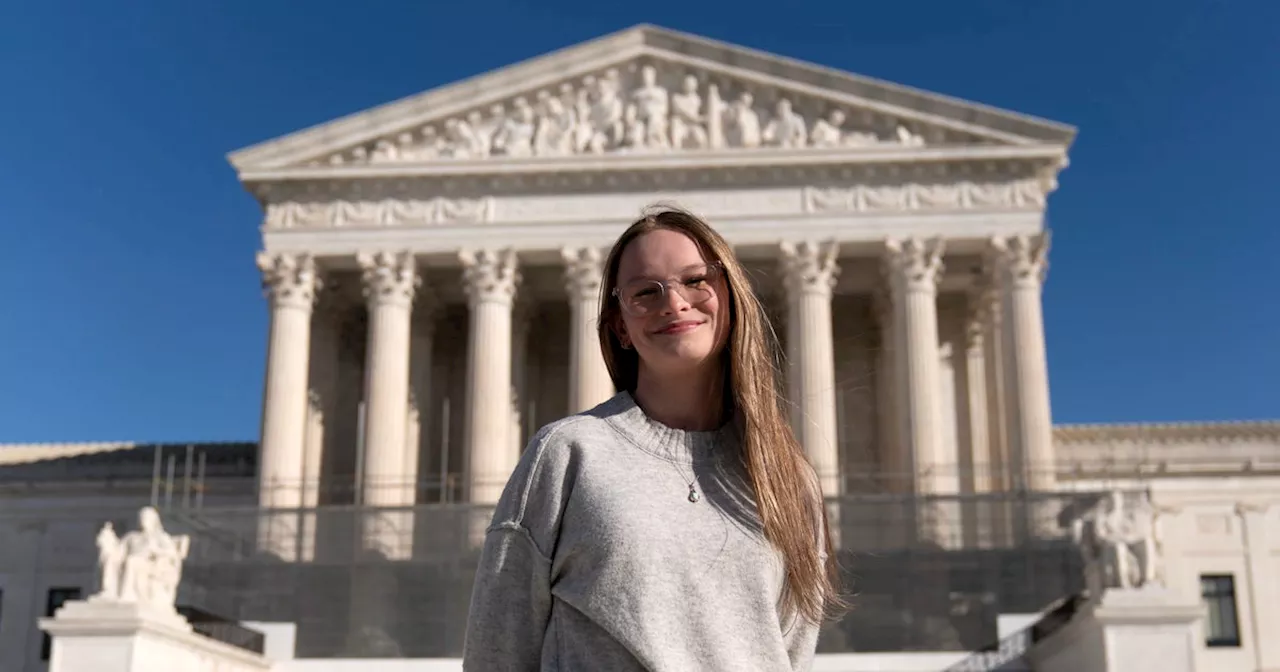
The Supreme Court is set to deliberate on legal challenges concerning laws in Idaho and West Virginia that prohibit transgender athletes from competing on girls’ and women’s sports teams. This pivotal case, which will be heard on March 5, 2024, addresses whether these state laws infringe upon constitutional rights and violate Title IX, a federal law that prohibits sex-based discrimination in federally funded education programs.
The debate over transgender athletes has intensified, with twenty-seven states enacting laws that restrict participation based on gender identity. The legal landscape shifted in 2020 when then-President Donald Trump issued an executive order aimed at eliminating federal funding for programs allowing transgender girls and women to compete in accordance with their gender identity. This led to the NCAA revising its policies, which subsequently limited participation in women’s sports to those assigned female at birth.
Lawsuits challenging these bans have been initiated by athletes such as Lindsay Hecox and Becky Pepper-Jackson, who assert that the laws violate their rights by excluding them from competing in teams that match their gender identity. The plaintiffs argue that these restrictions not only discriminate against transgender individuals but also deny them equal opportunities to participate in sports, which they view as essential for personal development and socialization.
Hecox, a transgender woman, sought to join the women’s track and cross-country teams at Boise State University but faced legal hurdles due to Idaho’s Fairness in Women’s Sports Act. This law mandates that public school and collegiate sports teams be designated based on biological sex and prohibits transgender girls and women from competing in women’s teams. Hecox contends that the law is unconstitutional and violates Title IX, having previously participated in club sports instead of school-sponsored athletics.
West Virginia’s comparable legislation, the Save Women’s Sports Act, was enacted in 2021 and shares similar stipulations regarding biological sex designation for athletic teams. Pepper-Jackson, a 15-year-old transgender girl, filed a lawsuit to challenge the law’s enforcement, arguing that it is discriminatory and undermines her right to compete.
The states defend their laws by asserting that they promote fair competition and safety in women’s sports. Officials from Idaho and West Virginia argue that sex-based classifications in these laws are justified to protect opportunities for female athletes. Madison Kenyon, a former collegiate athlete, emphasized the perceived unfairness of allowing cisgender males to compete in female categories, stating, “Every time a male athlete runs as a female, a roster spot is lost to a female. It means it’s given to a male. And that’s unfair.”
Legal experts predict that the Supreme Court’s decision will have far-reaching implications beyond these individual cases. The justices must determine whether the bans violate the constitutional guarantee of equal protection and whether Title IX protections extend to transgender individuals. A ruling in favor of the states could reinforce existing laws and potentially embolden further restrictions, while a decision against the bans may lead to increased protections for transgender athletes.
The legal arguments extend to broader discussions about gender identity and athletic performance. Advocates for transgender rights assert that the bans perpetuate discrimination and deny individuals the opportunity to compete based on their gender identity. In contrast, proponents of the bans argue that physiological differences between sexes necessitate separate categories in sports, claiming that allowing transgender women to compete against cisgender women undermines the integrity of women’s sports.
As the Supreme Court prepares to hear these cases, the outcome remains uncertain but is poised to significantly influence the ongoing debate over transgender rights in athletics and beyond. The implications of this decision could resonate through educational institutions and sports organizations across the United States and potentially set a precedent for similar cases internationally.
















