









































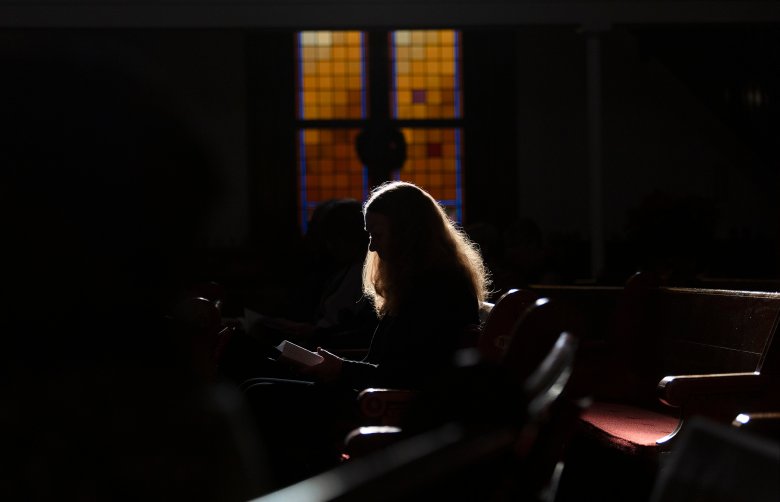
Maine is experiencing a notable transformation in its spiritual landscape, with a marked decline in organized religion. Recent surveys indicate that around 50 percent of Mainers now identify as religiously unaffiliated, a significant shift that reflects broader trends across the United States.
At the heart of this trend is the growing popularity of alternative spiritual practices. For instance, Camilla Norsworthy, a resident of Dover-Foxcroft, has transitioned from her upbringing in the Church of Jesus Christ of Latter-day Saints to becoming a Level 3 certified Reiki practitioner. Norsworthy’s journey began in 2021 when she sought relief from the physical strain of her job as an upholsterer. Her transformative experience with Reiki, a Japanese healing technique, led her to launch her own practice in September 2024.
The shift towards spirituality over traditional religious affiliation is echoed in broader data. The Nones Project classifies the non-religious segment of the population into several categories. The largest group, known as “spiritual but not religious” (SBNR), comprises approximately 36 percent of the religiously unaffiliated. This group prioritizes spirituality while viewing organized religion as less significant in their lives.
In Maine, the percentage of individuals identifying as Evangelical Protestants has seen a slight increase, consistent with the growth of conservative denominations such as the Southern Baptist Convention. Despite this, the state ranks low on various religious metrics. According to the Pew Research Center’s 2023-24 Religious Landscape Study, Maine ranked 48th or 49th across three out of four key religious measures. Only 20 percent of Maine adults attend religious services at least once a month, and just under a quarter rate religion as very important in their lives.
The exploration of spirituality among Mainers often takes unconventional forms. While roughly a third of those identifying as religiously unaffiliated still consider themselves spiritual, many engage in practices that transcend traditional religious boundaries. Activities such as visiting nature, practicing yoga, or meditating for spiritual reasons are becoming more common.
Maine’s spiritual environment is also reflected in the state’s low rankings for metrics like feeling a deep sense of spiritual peace. Despite this, there is evidence of a burgeoning interest in spiritual activities. The state ranked 38th for the likelihood of residents engaging in spiritual activities weekly, marking its highest performance across any metric.
The U.S. Religion Census, conducted every decade, provides a comprehensive look at religious adherence in Maine. The latest census indicates that just over 30 percent of Mainers are associated with a specific religious group, a figure lower than all states except New Hampshire. This suggests that nearly 70 percent of the population may not feel a connection to organized religion, with some seeking alternative forms of community and meaning.
Professor Scott Thumma from Hartford International University for Religion and Peace notes that younger generations, particularly those who have come of age since the 1990s, are increasingly identifying as “nones” or spiritual but not religious. He attributes this trend to a desire for engaging with the divine that diverges from traditional religious practices.
Even with the decline in organized religion, the Pew Research Center indicates that the drop in religious affiliation has slowed nationally since the onset of the COVID-19 pandemic. Some conservative Christian groups have suggested a revival among young Americans, although recent data does not support the notion of a widespread resurgence in religious affiliation.
For Norsworthy, the burgeoning interest in alternative spiritual practices in Maine is promising. She has successfully organized various spiritual events, including Reiki sessions and sound baths, attracting small but engaged audiences in rural settings. As she observes, there is a palpable demand for spaces that cater to spiritual needs outside the confines of organized religion.
“There is this surge of alternative people looking for enlightenment, really, peace, to feel better than their current state,” Norsworthy stated. Her experiences underscore a significant shift in how individuals in Maine are exploring spirituality, reflecting a broader trend toward individualized belief systems that prioritize personal growth and connection over traditional religious structures.
















