









































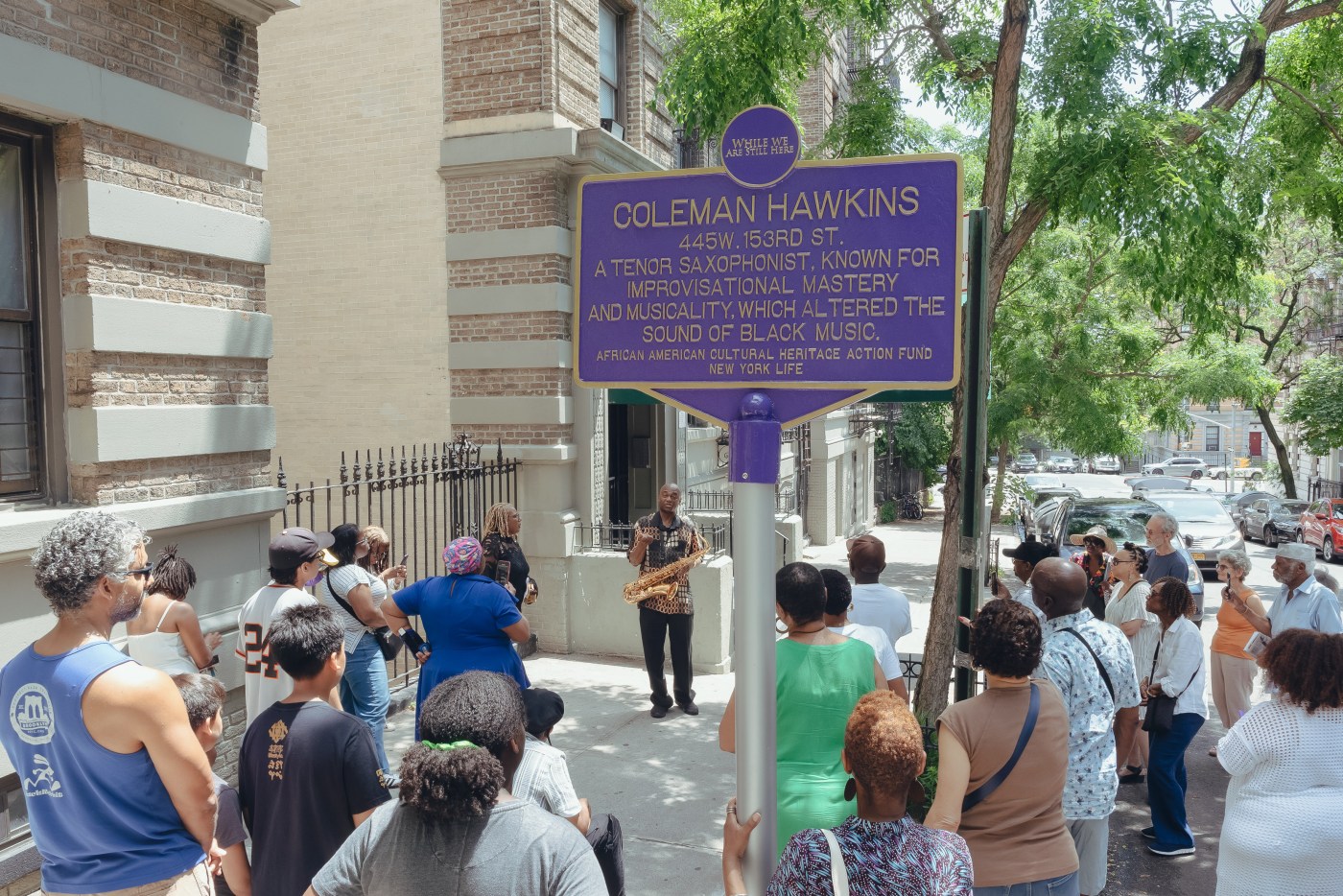
The “Signs of the Times: Harlem Markers Project” has introduced a new app and live tours aimed at showcasing Harlem’s rich history. This initiative highlights significant figures, organizations, and buildings that contributed to Black creativity and culture during the Harlem Renaissance of the 1920s and 1930s. The project comprises a series of 25 plaques strategically placed throughout the neighborhood, each telling a unique story of Harlem’s vibrant past.
Karen D. Taylor, founder and executive director of the nonprofit While We Are Still Here, leads this endeavor. She expressed the project’s goal to shift perceptions of Harlem, which has often been viewed through a lens of decline since the 1960s. “We want to demonstrate the richness of that culture and the fact that people here contributed enormously to the culture of the United States of America,” Taylor stated.
Interactive Exploration of Harlem’s Legacy
The recently launched free app, “Signs of the Times,” invites users to explore Harlem’s history interactively. By aligning each app entry with a corresponding plaque, users can easily locate historical sites and receive directions based on their current position. This self-guided tour aims to enhance the visitor experience in Harlem, allowing users to engage more deeply with the area’s cultural heritage. Taylor envisions a future where local businesses and project sponsors can advertise within the app, further enriching its offerings.
In addition to the app, Taylor and her volunteers conducted “mini tours” last year, providing intimate experiences for small groups at select sites. The initiative is set to evolve into fully guided tours that include more stops and opportunities for personal engagement. The markers span from West 110th Street near Central Park to West 162nd Street, showcasing a broad spectrum of Harlem’s historical significance.
One memorable tour featured a plaque dedicated to Coleman Hawkins, a celebrated tenor saxophonist. Participants were treated to a live performance by saxophonist James Carter, who played Hawkins’ renowned composition, “Body and Soul,” while sharing insights about the artist’s impact on music and racial boundaries.
Expanding the Vision and Community Engagement
Taylor also aims to honor other influential figures and organizations through additional markers. She hopes to recognize George Edmund, co-founder of the National Urban League, with a plaque outside the Urban League building. Another potential marker could celebrate the New Amsterdam Musical Association, which was founded in the early 1900s when Black musicians faced significant barriers in the music industry.
Moreover, Taylor highlights the historical significance of what is now the Tsion Café, formerly known as Jimmy’s Chicken Shack, where both Malcolm X and Redd Foxx worked as dishwashers. This location inspired a play titled “Malcolm X and Redd Foxx Washing Dishes at Jimmy’s Chicken Shack in Harlem,” which is currently touring regional theaters across the United States.
As the project continues to develop, Taylor has scheduled a community forum on February 21, 2024, at the George Bruce Library to solicit input from local residents. The previous forum in 2020 attracted about 50 participants, and Taylor hopes for an even larger turnout this time. Additionally, the ninth annual Sugar Hill Music Festival is set for June 27, 2024, featuring various guests and activities yet to be announced.
Overall, Taylor expresses satisfaction with the project’s progress. She believes that even if the final count of markers remains at 25, they will inspire deeper exploration into Harlem’s history. “The history is very rich, and it’s very deep,” she noted, emphasizing that the project’s impact extends beyond mere recognition of the past; it seeks to foster a broader understanding of Harlem’s pivotal role in shaping American culture.
















