









































After years of adaptation and technology evolution, a family living room can quickly become a complex hub of devices. This is precisely what happened when a couple, along with their young son, moved into a new home and decided to prioritize family functionality over a dedicated home cinema experience. In this story, the transition from a Logitech Harmony remote to the newer Sofabaton X1S universal remote illustrates the challenges and benefits of modern home entertainment systems.
From Harmony to Sofabaton: The Shift in Home Entertainment
The family originally relied on a sophisticated audio-visual system, including a powerful 12-speaker setup. However, in pursuit of a more family-friendly environment, they opted for a simpler Sony A95L OLED TV paired with the HT-A9 sound system, accompanied by the optional SA-SW5 subwoofer. While this new system proved effective with its Dolby Atmos capabilities, the complexity of multiple devices soon returned.
As new gaming consoles and streaming devices were added—namely, a PlayStation 5, Xbox Series X, and a Nintendo Switch—the need for a more comprehensive control solution became apparent. The existing setup, which depended on HDMI-CEC for seamless operation, quickly turned into a frustrating experience. Users found themselves navigating through a collection of remotes and frequently encountering blank screens due to unreliable input switching.
The Quest for a Universal Solution
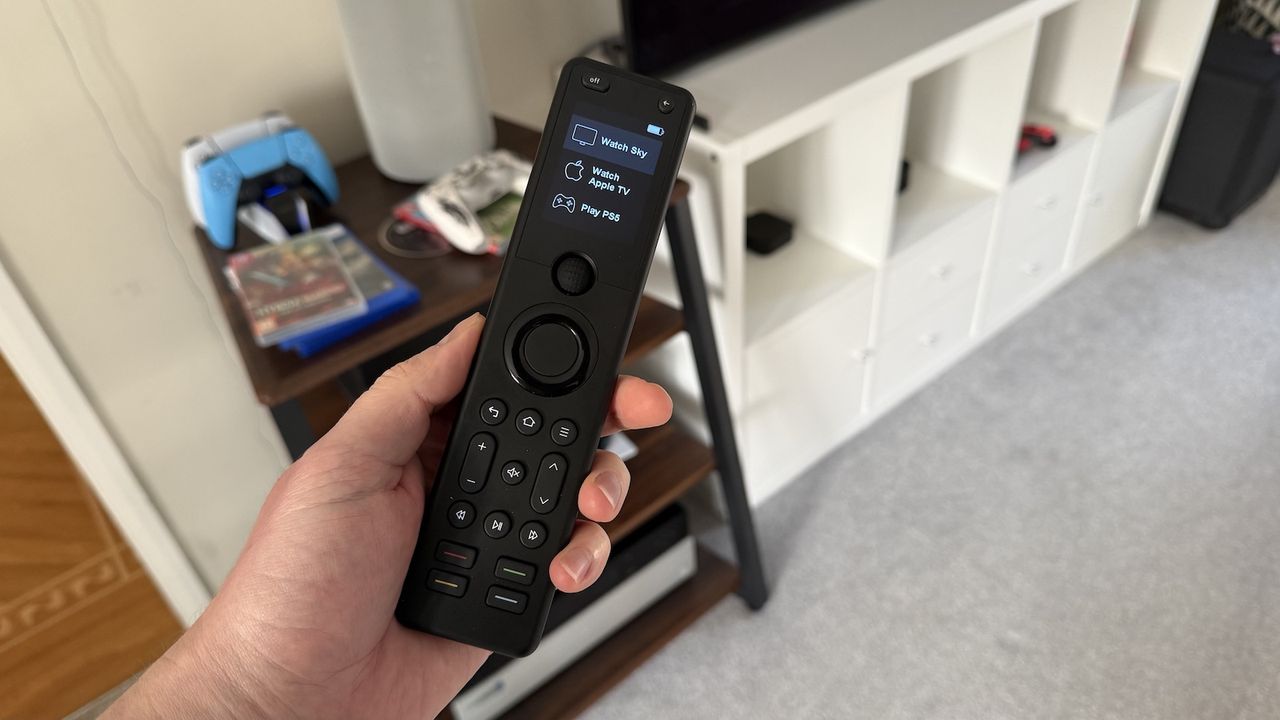
Acknowledging the inconvenience, the family sought a universal remote to simplify their setup. Although the previous Logitech Harmony remote was still available, its discontinuation raised concerns about future support and functionality. This prompted the search for a modern alternative, leading to the discovery of the Sofabaton X1S.
After a week of using the X1S, the family found it to be a significant improvement over managing multiple remotes. Yet, it was not without its shortcomings. A notable absence was the ‘Help’ button, a feature that had been integral to the Harmony remote experience. In situations where the remote fails to power on a device or switch inputs, users must manually navigate through the device menu, which can be cumbersome and time-consuming.
While the X1S generally executed commands successfully, the lack of a straightforward recovery process when issues arose was a frustration. Users often found that they had to rely on original remotes for specific devices, undermining the convenience the universal remote was meant to provide.
Setup challenges also mirrored the difficulties encountered during daily use. The configuration process relied entirely on a mobile app, which some users found less efficient than using a computer. The quest for accurate device profiles proved hit-or-miss, particularly with UK-specific equipment like the Sky Stream Puck. This led to additional manual adjustments, further complicating the user experience.
Despite these drawbacks, the Sofabaton X1S garnered praise for its sleek design and reliable functionality. The remote successfully condensed the family’s six remotes into one, allowing them to regain control of their home entertainment system.
The X1S’s scroll wheel was another highlight, providing a tactile alternative to touchscreens. Additionally, the remote’s transmitter effectively reached devices tucked away in hard-to-access locations, enhancing overall usability.
Ultimately, while the Sofabaton X1S does not fully replace the Logitech Harmony, it offers a viable solution for families seeking simplicity in their entertainment setups. The transition has helped restore order to the home cinema, allowing for more enjoyable movie nights and gaming sessions. As technology continues to evolve, consumers are reminded that even the best solutions may require adjustments to adapt to a changing landscape.
















