









































A new exhibition at the International Center of Photography (ICP) in Manhattan aims to offer a fresh perspective on the illustrious career of Eugène Atget. Titled Eugène Atget: The Making of a Reputation, the exhibition runs until May 4, 2024. However, early impressions suggest it may not deliver on its promise of a groundbreaking approach to Atget’s legacy.
The exhibition predominantly revisits the well-known narrative of Atget’s life, highlighting his obscurity until the intervention of photographer Berenice Abbott. Following Atget’s death, Abbott famously rescued his archive and championed his work featuring the streets of Paris. While the exhibition’s color scheme, with dark red walls and gold text, evokes a sense of historical grandeur, the content largely reiterates familiar themes rather than introducing new insights.
Despite its shortcomings, the exhibition features stunning prints that capture the intricate details of Atget’s Parisian scenes. One notable photograph, “Pontoise, Place du Grand Martroy” (1902), invites viewers to immerse themselves in the image, revealing a world that feels both intimate and distant. Atget’s work aimed to document the rapidly changing landscape of old Paris, often photographing before dawn to capture the city in its quietude. This absence of people creates a haunting atmosphere, prompting reflections on the transient nature of urban life.
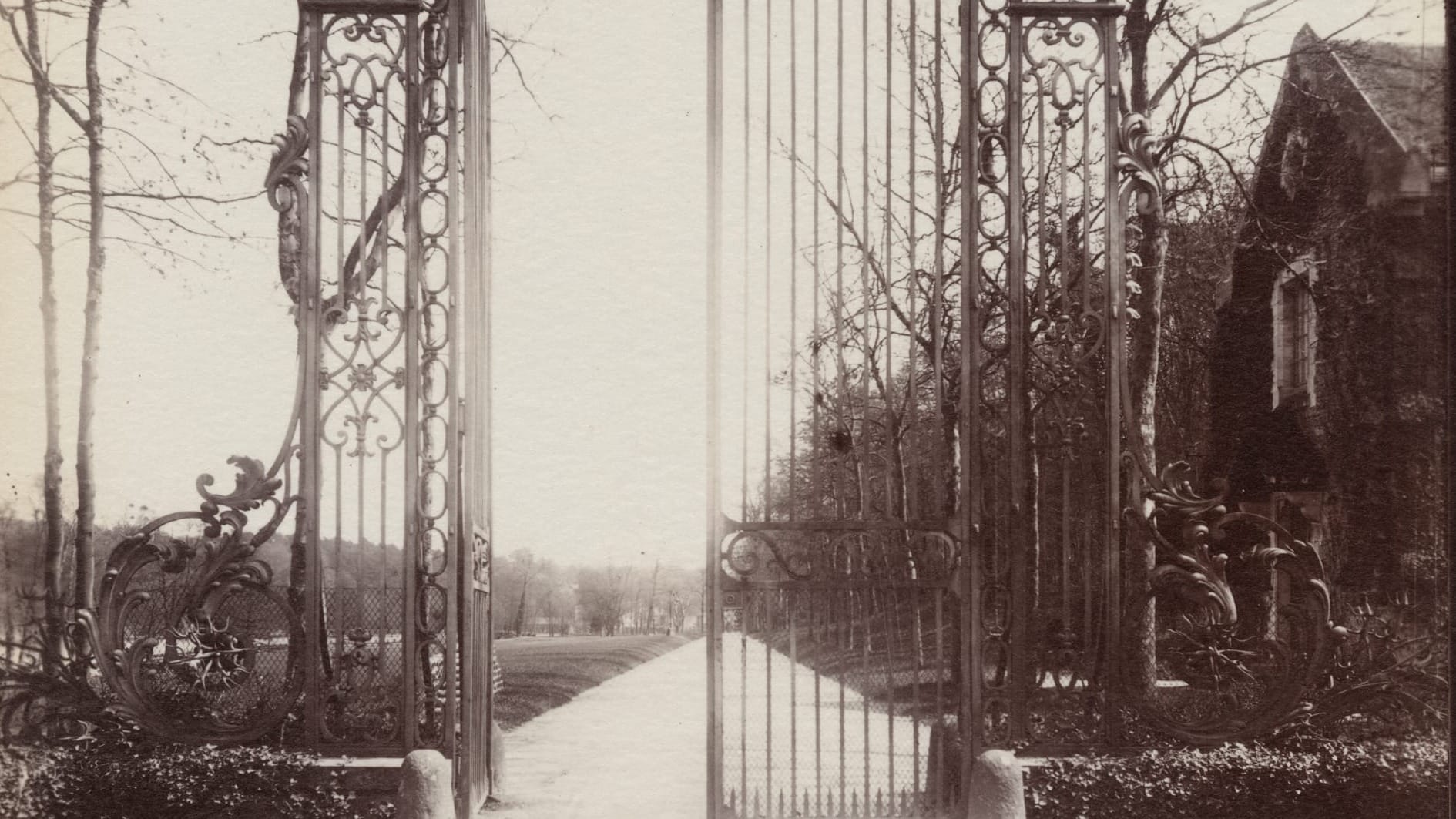
Another striking piece, “Trianon” (1926), showcases a garden scene that resonates with the viewer’s imagination. The photograph’s composition encourages a sense of nostalgia for places that might exist only in dreams or half-remembered experiences. Such depth of feeling is part of what has made Atget a favorite among Surrealist artists.
Atget himself never considered his photographs as art; he marketed them as “documents for artists,” intended as references for painters. His images served to document architectural elements and urban landscapes. It was only after Abbott’s involvement that Atget was rebranded as an artistic figure, a transformation that has sparked ongoing debate among scholars regarding the implications of this shift.
The juxtaposition of Atget’s and Abbott’s portraits in the exhibition further illustrates their contrasting worlds. While Atget’s formal pose reflects traditional portraiture, Abbott’s modernist angle, complete with a cat nestled in her arm, signifies a departure from convention. This visual dialogue raises questions about the origins of the reverence surrounding Atget’s work: Is it rooted in the photographs themselves or in Abbott’s reinterpretation of his legacy?
As the exhibition unfolds, it becomes apparent that the innovative angle promised by ICP may not be essential. The allure of Atget’s photographs lies in their ability to evoke emotion and nostalgia, transcending the context in which they were originally created. In an age where images are increasingly recycled and recontextualized, Atget’s work continues to resonate, prompting viewers to engage with both the past and present.
The exhibition, curated by David Campany, remains a remarkable opportunity to experience Atget’s contributions to photography. While it may not introduce groundbreaking revelations, it serves as a reminder of the beauty and complexity of a world captured in moments that continue to inspire.
















