
































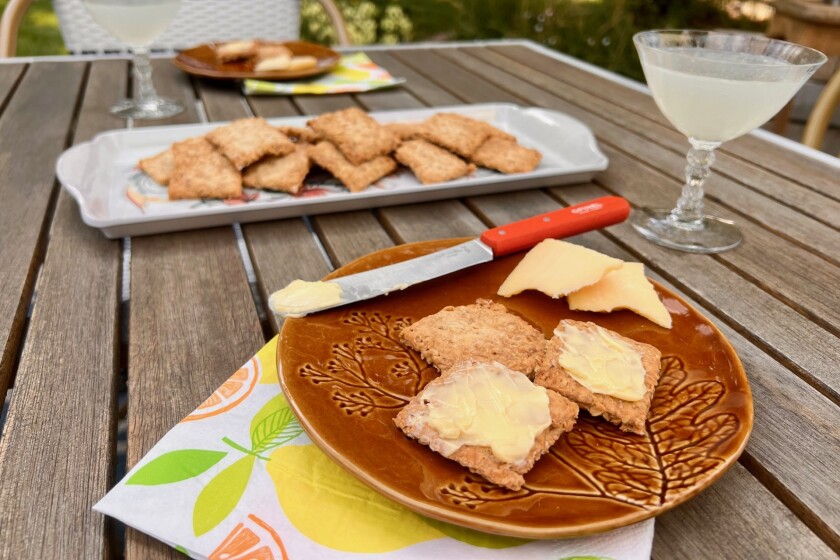
As parents prepare for the return of school and activities this September, many are turning to healthy snacks for their children. A recipe for homemade oatmeal crackers, known as Havre Kjeks, from the 1985 community cookbook The Joy of Sharing, highlights a nostalgic and nutritious option. Contributed by Olga I. Gryde, this recipe offers a glimpse into the culinary practices of earlier generations and serves as a reminder of the importance of preserving family and cultural recipes.
The ingredient list for Havre Kjeks is straightforward, comprising oatmeal, flour, baking powder, salt, shortening, and milk. While the recipe appears simple, the execution requires careful attention to detail. For instance, selecting the right type of oatmeal is crucial; rolled oats are often preferred for baking crackers due to their texture. The instructions, which state to “combine all ingredients,” are minimalist, leaving much to the interpretation and experience of the cook. This simplicity can be deceptive, as it demands a knowledge of dough consistency and baking techniques.
Baking the crackers at a moderate temperature of 350 degrees Fahrenheit for approximately 50 minutes is essential for achieving the desired crispness. The final product emerges golden brown, evoking fond memories of homemade snacks. This experience underscores the value of community cookbooks, where recipes often reflect a blend of personal and collective culinary heritage.
Exploring the Origins of the Recipe
The origins of Gryde’s Havre Kjeks recipe raise questions about authorship and attribution in community cookbooks. While Gryde’s name is associated with the recipe in The Joy of Sharing, its content closely mirrors recipes found in Julia Peterson Tufford’s Original Scandinavian Recipes. This raises the issue of recipe ownership, as many community cookbooks contain recipes that lack clear attribution, often leading to a blending of culinary traditions without acknowledgment.
Community cookbooks have historically been a platform for sharing family recipes, yet they often do not specify their sources. This practice can frustrate culinary enthusiasts who wish to trace the roots of a dish. Although recipes are not subject to copyright, it would enhance the value of these cookbooks if they included notes on sources, allowing readers to appreciate the influences behind the recipes.
For instance, in a previous article discussing Cathy Knutson’s recipe for “Liver Slices,” it was noted that the source was Colleen Roe, the McHenry County Extension Agent. Such transparency not only enriches the reader’s experience but also acknowledges the interconnectedness of culinary practices.
The Significance of Culinary Heritage
Olga Gryde is not only a contributor to The Joy of Sharing but also an advocate for preserving her Scandinavian heritage. Her contributions extend beyond recipes; she has been featured in H. Elaine Lindgren’s book, Land in Her Own Name: Women as Homesteaders in North Dakota, highlighting the stories of women who took advantage of the Homestead Act. Gryde’s mother, Sarah Knutson Gryde, was among those pioneering women, reflecting a deep-rooted connection to the land and its traditions.
The memories associated with making oatmeal crackers extend beyond their taste. For many, these recipes serve as a link to family history and cultural identity. Gryde’s experience with Havre Kjeks invokes recollections of sharing flatbreads and crackers with her great aunt, adding a personal narrative to the culinary process. The act of preparing these crackers becomes a means of connecting with the past while appreciating the flavors of the present.
The journey of making Havre Kjeks illustrates the beauty of communal cooking. While it may seem like a simple recipe, the process is steeped in tradition, knowledge, and personal storytelling. As parents seek to provide healthy snacks for their children, revisiting such recipes can foster a sense of connection to family history and cultural heritage.
In conclusion, the oatmeal cracker recipe from The Joy of Sharing is more than just a healthy snack option. It represents the intersection of culinary tradition, personal history, and the importance of acknowledging sources in community cookbooks. As more families embrace homemade snacks, they also partake in the rich tapestry of culinary heritage that binds generations together.