






































As the holiday season approaches, many seek ways to create warm and inviting experiences for family and friends. One delightful option is a traditional spiced beverage known as Wassail, which has roots in both English history and festive gatherings. This cider-based drink, popularized in the 12th century, is both easy to prepare and perfect for toasting health and good fortune during winter celebrations.
The recipe for Wassail is featured in the 1985 cookbook, “The Joy of Sharing,” compiled by the Oak Valley American Lutheran Women of Velva, North Dakota. Mabel Olson’s recipe calls for a combination of apple cider, sugar, and a blend of spices such as cinnamon, allspice, and cloves. The preparation involves simmering these ingredients for approximately 15 minutes, followed by the addition of various fruit juices, including cranberry, orange, and fresh-squeezed lemon. A suggested twist is substituting pomegranate juice for cranberry, which adds a unique tartness and vibrant color to the punch.
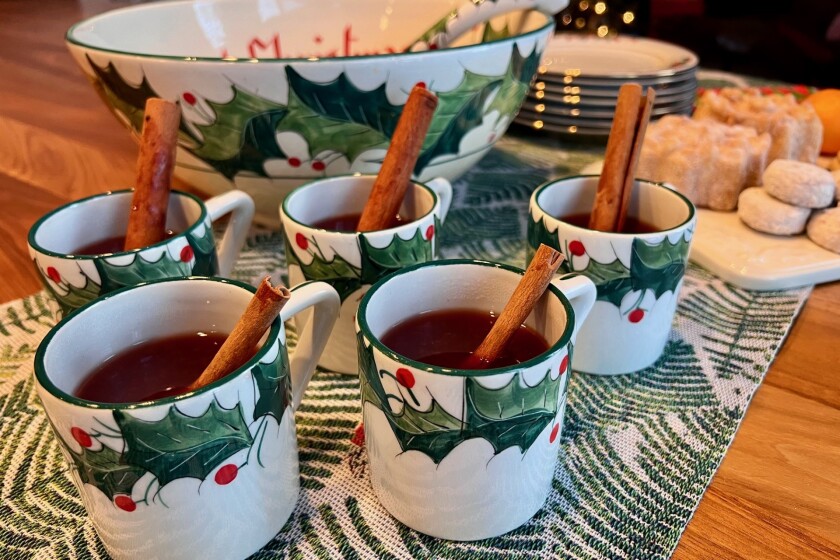
Once prepared, the Wassail can be served warm, ideally in small cups garnished with cinnamon sticks. It makes for an inviting pre-dinner drink that combines sweetness with tanginess. Olson’s recipe also notes that the drink can be made in an electric percolator, facilitating easy serving during gatherings. For larger parties, keeping the Wassail in a pre-warmed crockpot or percolator allows guests to refill their cups without interruption.
The significance of the term “Wassail” adds a layer of historical charm to this drink. According to the Oxford English Dictionary, “wassail” originates from the Old English phrase “wes hál,” meaning “be in good health.” Initially a greeting, it evolved to denote a spiced drink shared among friends and family during festive occasions. By the 18th century, English carolers would carry decorative wassail bowls, toasting the health of their neighbors as part of the holiday tradition.
Variations of Wassail have appeared throughout history, with additions like eggs, milk, and even toast, lending to its alternate name, “lamb’s wool.” This moniker refers to the appearance created by soggy toast or apples floating in the drink. As cocktail historian David Wondrich notes in “Punch: The Delights and Dangers of the Flowing Bowl,” Wassail embodies the spirit of camaraderie and celebration, much like punch—a blend of citrus, spices, and spirits commonly enjoyed in social settings.
Though Olson’s recipe does not call for alcohol, many home cooks may choose to enhance their Wassail with a splash of brandy or whiskey, elevating the festive experience. Other well-known recipes, such as those found in “Joy of Cooking” and “The New York Times Essential Book of Cocktails,” recommend incorporating ingredients like hard cider and Madeira for added depth of flavor.
The beauty of Wassail lies not just in its taste but in its ability to bring people together. As Rosie Schaap highlights, Wassail is designed for communal enjoyment, emphasizing the importance of sharing during the holiday season. With its rich burgundy hue and inviting aroma, Wassail stands out as a perfect addition to any holiday celebration.
In these colder months, as families gather to celebrate traditions, Wassail serves as a reminder of the joy of sharing. Its quick preparation and comforting flavors make it an ideal choice for those looking to add warmth and cheer to their holiday gatherings. Whether prepared on the stovetop or in a percolator, this festive drink promises to delight guests and create lasting memories.