









































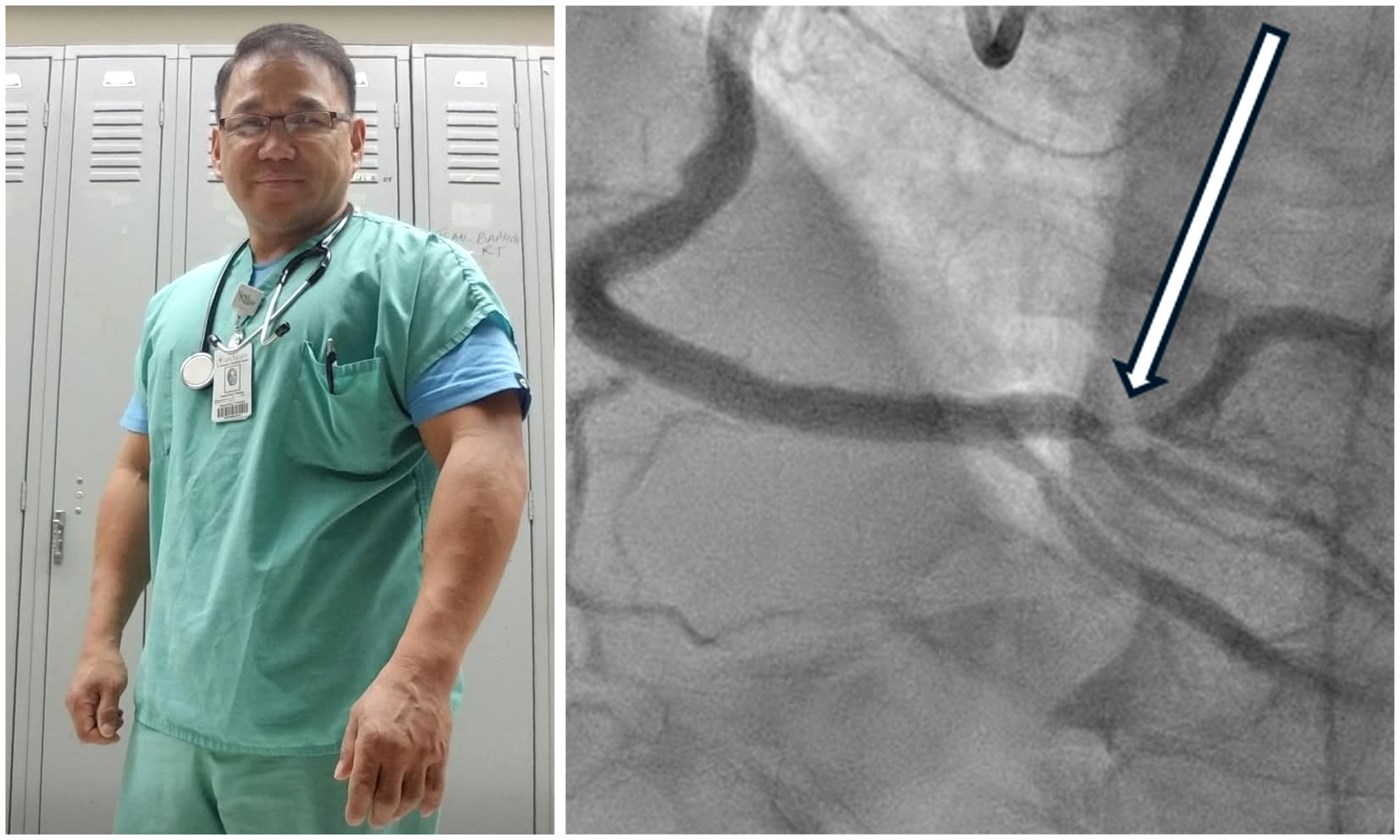
A Queens resident experienced a life-changing heart attack last summer while at the gym, prompting him to urge others to prioritize their health. Chris Ortiz, a respiratory therapist at New York University, faced a critical moment just four days before his 60th birthday. What began as a routine Sunday workout quickly turned into a harrowing emergency that he attributes to a combination of luck and timely medical intervention.
On that day, Ortiz and his wife had just returned from their granddaughter’s 16th birthday party. They decided to visit their local gym at around 9 a.m. After splitting up—his wife heading downstairs for cardio while Ortiz stayed upstairs for weight training—his heart suddenly stopped. His wife received a shocking phone call informing her of his heart attack, a moment Ortiz describes as surreal. “She was like ‘is this a joke?’” he recalled, noting he has no memory of collapsing or the ambulance ride that followed.
Fortunately, a Mount Sinai Queens nurse happened to be at the gym, quickly assessing the situation. She initiated CPR and alerted the hospital to prepare for Ortiz’s arrival. An ambulance arrived promptly, transporting him to the emergency department where he received critical care.
Heart disease is the leading cause of death in the United States, with the Centers for Disease Control and Prevention (CDC) reporting that cardiovascular disease claims a life about every 34 seconds. In Ortiz’s case, he was brought to the hospital within minutes of experiencing the heart attack, a critical factor that improved his chances of survival. Dr. David Power, an interventional cardiologist at Mount Sinai Queens, explained that Ortiz arrived just in time to receive life-saving procedures.
Once in the catheterization lab, doctors discovered a 100% blocked artery. “We opened it up with a balloon and then placed a stent to restore blood flow to the heart,” Dr. Power said. This rapid response was vital, as national data indicates that approximately 350,000 people experience out-of-hospital cardiac arrests each year, with about 90% succumbing to the event.
The circumstances surrounding Ortiz’s cardiac arrest played a significant role in his survival. The busy gym environment allowed for quick detection and response, which he acknowledges could have had a very different outcome had it occurred at home. “It could have happened when I was home by myself and I could have passed out. Then, it would have been a whole different story,” he noted.
Despite his active lifestyle, Ortiz had several unaddressed risk factors, including high cholesterol and dietary challenges. He admits to having an “I’m fine” mentality, which led him to manage his health without medical intervention. The American Heart Association warns that such attitudes can transform manageable risks into emergencies.
Dr. Power emphasizes the importance of identifying and managing modifiable risks like high blood pressure, cholesterol, diabetes, smoking, and inactivity. While some factors like age and family history cannot be altered, awareness and proactive management can significantly reduce the likelihood of heart-related emergencies.
Family has been a motivating factor in Ortiz’s journey. He reflects on the potential impact had he survived with severe damage, stating, “I could have ended up basically a vegetable in a nursing home right now.” In a twist of irony, two of his daughters have been involved in saving lives during emergencies, leading Ortiz to ponder, “Maybe it’s because my children saved someone’s lives that God sent the ER nurse in the gym that day to save mine.”
Following his heart procedure, Ortiz experienced a swift recovery and was discharged from the hospital shortly thereafter. However, he describes changing his long-standing eating habits as one of the most challenging aspects of his rehabilitation. He is now an advocate for heart health, urging others not to wait for symptoms before taking action. “Don’t wait until you start having the symptoms and have the cardiac arrest like I did,” Ortiz advises. “Prevention is the best thing.”
Since his heart attack in July 2022, Ortiz’s perspective on time has shifted dramatically. He emphasizes the importance of family and cherishing moments that may seem trivial. “I’m trying to not work as much and spend more time with my family and not take things so seriously all the time,” he said. “Time is not given. All go away from me any moment… this is all extra for me.”
Ortiz’s story serves as a poignant reminder of the critical importance of heart health awareness and the need for immediate action in emergencies.
















