




























Residents of Colorado facing vision loss can now find essential support at the Ensight Skills Center and the Curtis Strong Center. These facilities provide a comprehensive range of services, including low-vision optometry, occupational therapy, and mobility training, all aimed at helping individuals maintain their independence.
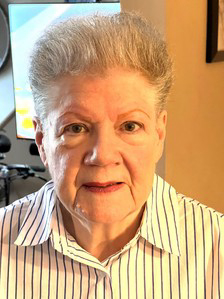
Melody Bettenhausen, CEO of Ensight Skills Center in Fort Collins, emphasized the organization’s commitment to empowering individuals. “Our program, being comprehensive, is still fairly unique,” she stated. “Our mission is to help people find services and resources to continue to be productive in society and to be independent. Really, that focus is independence.”
A Response to Community Needs
Founded in 2001 by former CEO Denny Moyer in collaboration with the Fort Collins Lions Club, the Ensight Skills Center emerged from a pressing community need. At the time, Northern Colorado lacked local services for those with visual impairments, leaving many individuals uncertain about where to seek assistance.
Moyer and the Lions Club envisioned a supportive environment where people with vision loss could receive the training and tools necessary to thrive in daily life. This vision resulted in the establishment of the Ensight Skills Center, which expanded to Greeley by acquiring the Curtis Strong Center in 2007. Recently, the Curtis Strong Center moved to a more accessible location at the Greeley Medical Clinic at 1900 16th St., Ste. 120. This change aims to better serve patients in the area. Additionally, Ensight operates six satellite locations across Colorado, along with a mobile clinic that brings services to rural communities.
“We try to make our services as accessible as possible,” Bettenhausen said. “Rural areas don’t have many options for low-vision services, so it’s important that we go to them.”
Comprehensive Support for Low-Vision Rehabilitation
The Ensight Skills Center and Curtis Strong Center specialize in low-vision rehabilitation. Their focus is not on curing or repairing eyesight, but on helping individuals live independently with the vision they retain.
“We only do the rehab,” Bettenhausen explained. “We can’t cure or fix anything. We’re about finding tools and learning skills. We’re looking at people’s remaining vision, their goals and helping them navigate daily life.”
Each person who seeks assistance at Ensight receives support from a dedicated low-vision rehabilitation team, which may include:
– **Low-vision optometrist** – conducts functional vision assessments
– **Occupational therapist** – teaches adaptive daily living skills
– **Orientation & mobility specialist** – provides guidance for travel safety
– **Assistive technology professional** – trains clients on devices and tools
Common causes of low vision include conditions such as macular degeneration, glaucoma, diabetic retinopathy, cataracts, and injuries resulting from strokes or traumatic brain injuries. The rehabilitation team evaluates each individual’s remaining vision and daily challenges to develop a personalized plan that may include:
– In-home or workplace therapy visits
– Learning new techniques for daily tasks
– Using large-print labels or pill organizers
– Practicing safe kitchen skills
– Navigating home and community spaces confidently
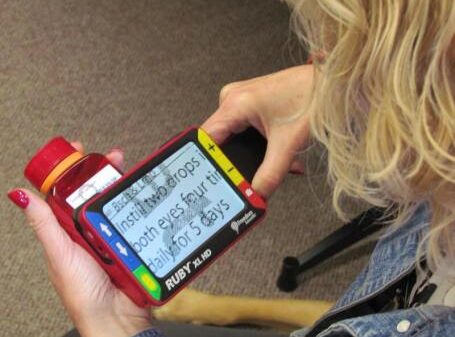
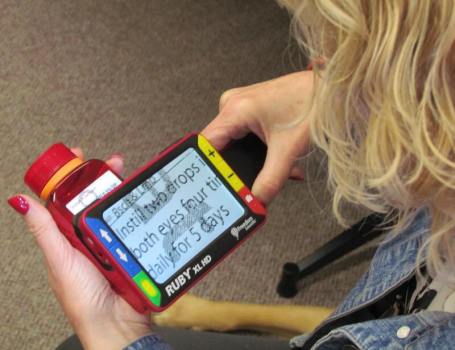
– Exploring assistive devices like magnifiers and electronic tools
Sometimes, small adjustments, such as using high-contrast cutting boards or labeling appliances, can significantly enhance an individual’s ability to prepare meals safely.
“That’s our goal: to help people continue to do the things they have to do and want to do,” Bettenhausen said.
The Centers also offer orientation and mobility training, which includes:
– White cane training
– Guide dog readiness assessments
– Bus route navigation
– Walking route planning
– Community travel skills
Ensight also assists clients in discovering various assistive technologies, from handheld magnifiers to smartphone accessibility features, ensuring they have the right tools for their daily lives.
Expanding Reach and Impact
Currently, the Ensight Skills Center and Curtis Strong Center employ a team of 14 trained professionals, all certified in their respective fields. Last year, they provided direct services to 830 clients, and the demand for their services continues to grow as more Coloradans seek support following diagnoses of vision impairments.
“We find new ways to serve more people every year,” Bettenhausen added. The organization is committed to increasing awareness surrounding low vision, ensuring that individuals do not feel compelled to struggle in silence.
Community support plays a crucial role in the ongoing operations of Ensight. The organization encourages engagement through various means, such as:
– Visiting the Ensight Skills Center or the Curtis Strong Center
– Learning more at ensightskills.org
– Donating to support low-vision services and assistive devices
– Volunteering time—Ensight is currently looking to recruit at least 10 more volunteers
“Just reach out and get a hold of us,” Bettenhausen said. “We are here to serve our community.”
For those seeking services, the Ensight Skills Center and the Curtis Strong Center are located at:
Greeley: 1900 16th St., Ste. 120, Greeley, CO 80631, 970.353.9417
Fort Collins: 1101 Oakridge Drive, Ste. C, Fort Collins, CO 80525, 970.407.9999