









































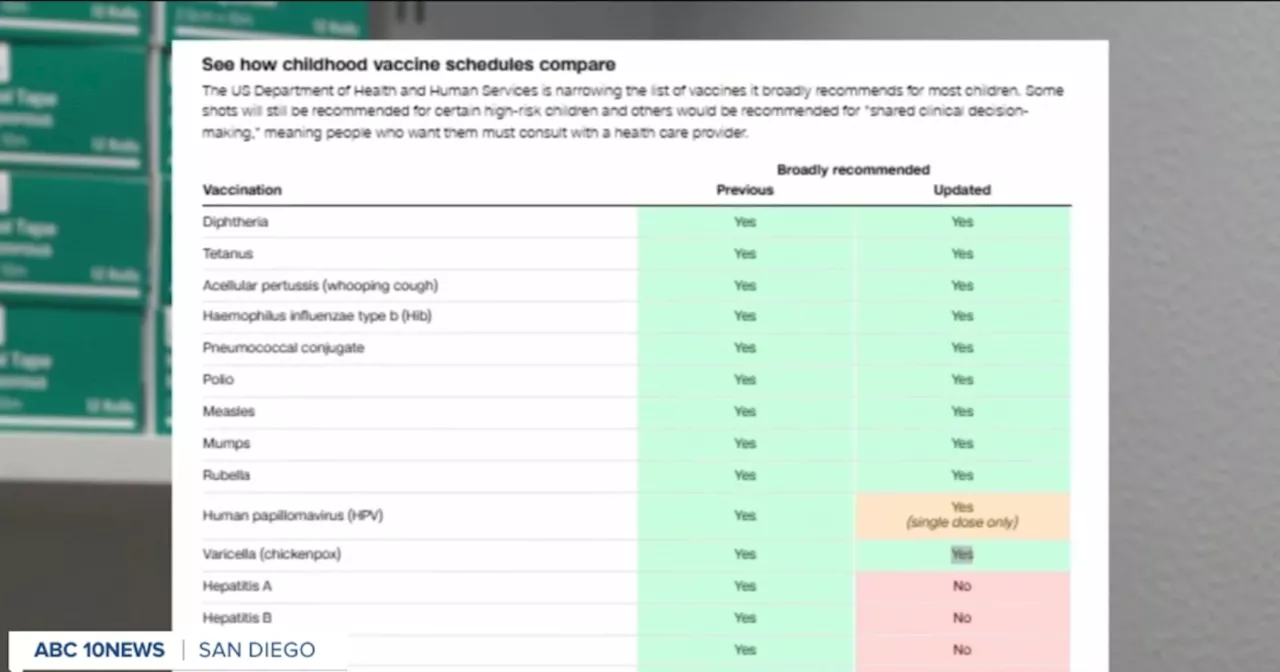
The Centers for Disease Control and Prevention (CDC) has introduced a new tiered vaccination schedule for children, which significantly alters previous recommendations. This updated federal guidance suggests that healthy children should receive only **11 vaccines** instead of the previously recommended **17**. The changes have raised concerns among pediatricians, educators, and parents regarding potential public health implications.
For years, pediatricians like Dr. John Bradley, Medical Director of Infectious Diseases at Rady Children’s Hospital, have played a crucial role in shaping vaccine recommendations through the American Academy of Pediatrics (AAP). According to Dr. Bradley, the process for developing vaccine guidelines has historically involved extensive discussion and analysis of scientific evidence, focusing on risks, safety, effectiveness, and costs.
Dr. Bradley expressed disappointment that the CDC’s recent decision was made without input from pediatricians or the AAP. He stated, “If the CDC had said ‘let’s have a meeting, let’s discuss this, we think the disease recommendations need to be modified’, I would have been really happy.” Instead, he noted that the AAP was excluded from the conversation, a move that has prompted a strong backlash from the organization. The AAP’s president described the changes as “dangerous and unnecessary.”
The implications of these new guidelines are significant. Dr. Bradley highlighted concerns that limiting vaccinations could lead to preventable hospitalizations for children. He remarked, “It’s dangerous because if you don’t give vaccines that we’ve been giving and have been shown to be safe and effective, and a child ends up in the hospital, that’s preventable.”
As the new recommendations are implemented, both parents and pediatricians are grappling with the practical aspects of these changes. Many are questioning whether certain vaccines may become less accessible or harder to get covered by insurance. Dr. Bradley pointed out that medical offices may need to take additional steps to navigate the new landscape, which could create confusion and reduce trust in pediatric recommendations.
He further noted, “If we can’t recommend it in association with the CDC any longer, that takes away some of the credibility the pediatricians may have.” The uncertainty surrounding the new guidelines has left many healthcare professionals and families concerned about the overall impact on public health.
Looking ahead, Dr. Bradley hopes that the pushback from pediatricians and parent groups will encourage the CDC to reconsider its approach. He stated, “I hope that they learn that this push back from all the professional societies and parent groups will have them think twice about just releasing a policy for vaccines without getting everyone’s input.”
The CDC’s revised childhood vaccine schedule is set to influence state requirements for school vaccinations and insurance coverage, raising the stakes for the ongoing dialogue about children’s health and the role of vaccines in preventing disease.
















