

























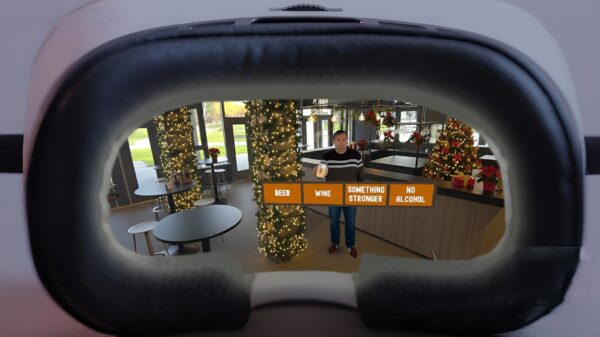









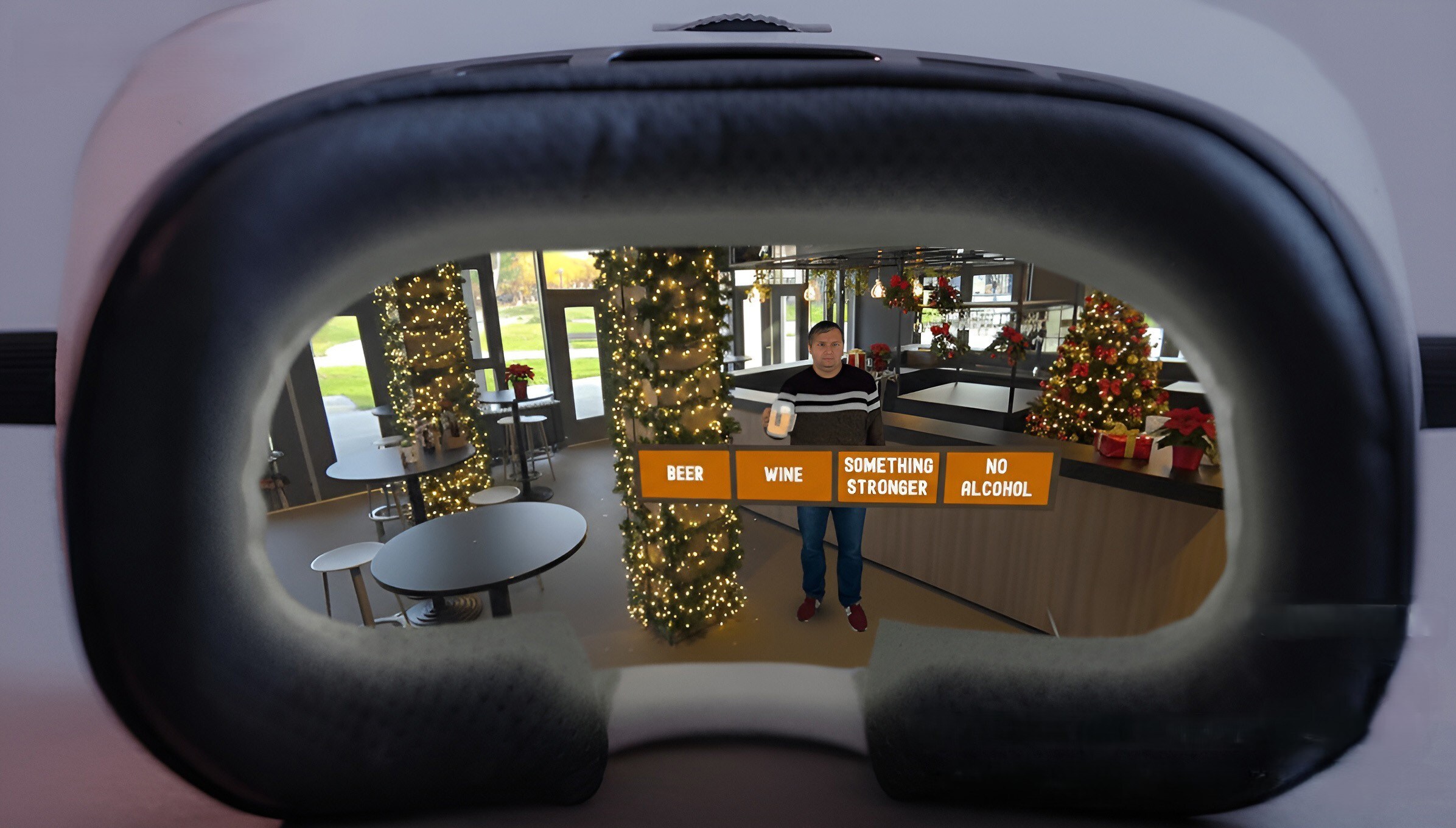
Researchers at Breda University of Applied Sciences (BUas), in collaboration with Novadic-Kentron (NK) and Thalamusa, have developed a groundbreaking Virtual Reality (VR) tool designed to assist individuals recovering from alcohol addiction during the challenging festive season. The tool, named RECOVRY (RElapse COntrol VR therapY), aims to help users resist alcohol temptation in social settings, leveraging immersive technology to create realistic scenarios.
As the festive season approaches, many people in recovery face heightened risks associated with social gatherings that often involve alcohol. Research indicates that between 47% and 75% of individuals relapse within a year following clinical treatment. This tool seeks to address the isolation and anxiety that can arise during this time, which may lead to avoidance of gatherings and, ultimately, increased alcohol consumption.
Training in Virtual Environments
The RECOVRY project utilizes VR environments, including simulated bars and social interactions, to train users in handling alcohol-related cravings. Professor Marnix van Gisbergen from BUas explains, “We have used VR settings to simulate situations that trigger cravings. Augmented Reality also allows these triggers to appear in patients’ living rooms, enabling them to practice saying no in a safe environment.” The research team is currently exploring the optimal level of realism needed for effective treatment and prevention.
The application combines traditional Cue Exposure Therapy with modern VR and Augmented Reality technologies. Psychiatrist Victor Buwalda, a former medical director at Novadic-Kentron, details the process: “RECOVRY unfolds in three phases: implementation within a clinical setting, therapist-assisted sessions outside the clinic, and preventative use at home without therapist involvement.” Early tests have shown success with clients undergoing treatment as well as former clients of Novadic-Kentron, one of the largest addiction treatment institutions in the Netherlands.
Future Development and International Expansion
Despite the promising initial results, the team is committed to further development. Van Gisbergen states, “We are expanding the application with more environments, virtual humans, interactions, and scenarios. We aim to include other addictions, such as smoking, and introduce relaxation environments featuring breathing exercises to help users decompress after engaging in VR sessions.”
The researchers are also interested in examining the long-term effects of RECOVRY on relapse rates in an international context. Buwalda emphasizes, “The initial results reveal significant improvements in reducing cravings and boosting self-confidence. We plan to collaborate with BUas, NK, and Eindhoven University of Technology to further investigate these effects.”
Ultimately, the goal of RECOVRY is not only to provide cost-effective and efficient treatment options but also to reduce isolation among those in recovery. As the festive season draws near, the hope is that this innovative tool will enable patients to participate more fully in social activities with their loved ones, fostering a sense of community and support during a time of year that can be particularly challenging for many.
For more information on the RECOVRY project, please visit the official website of Breda University of Applied Sciences.