









































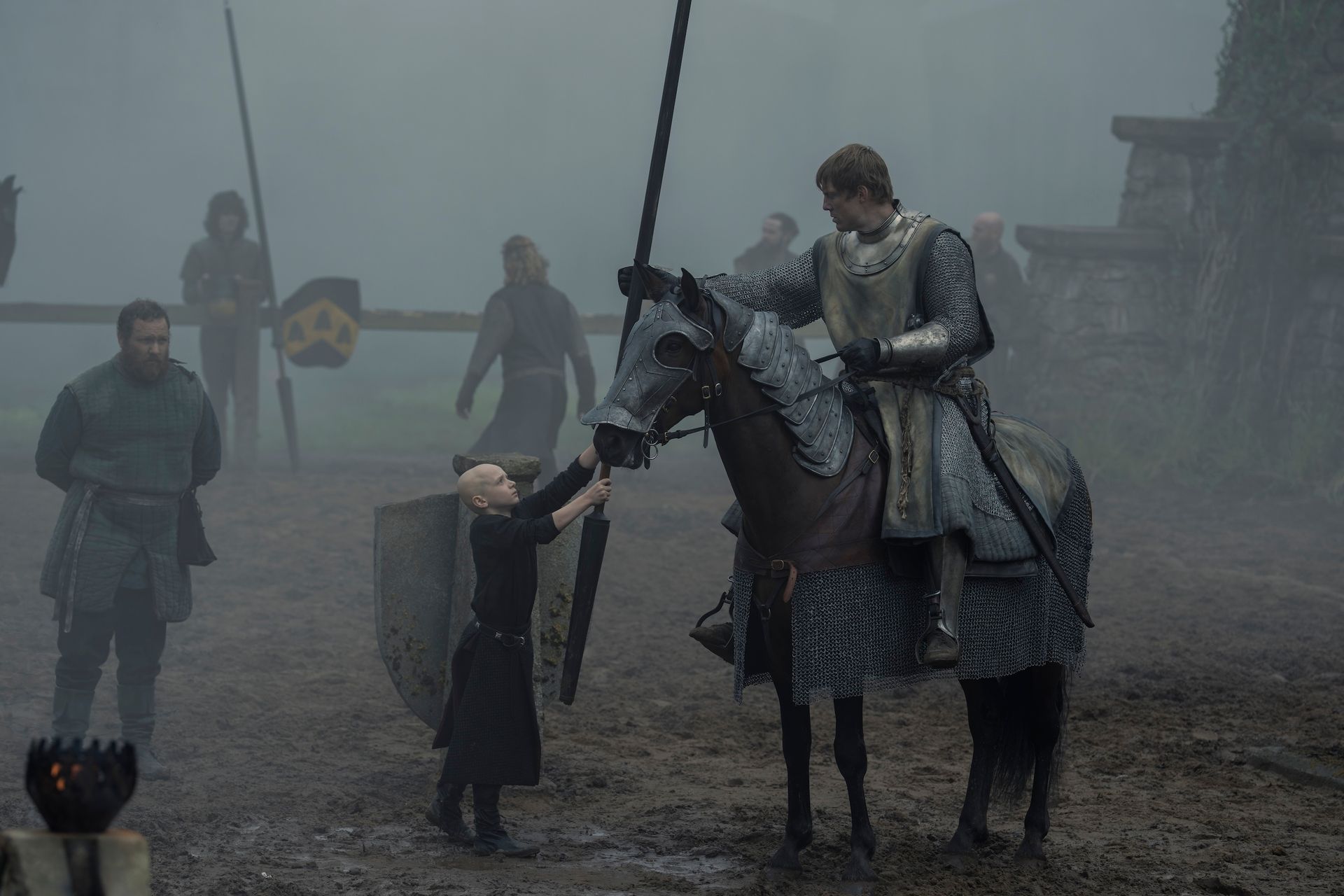
HBO’s new series, A Knight of the Seven Kingdoms, has made a remarkable debut, quickly becoming one of the network’s most-watched premieres ever. The first season concluded with strong audience engagement and critical acclaim, standing out as one of the highest-rated episodes in the Game of Thrones franchise on IMDB. The series benefits significantly from a completed narrative, drawing from the already established Dunk and Egg novellas by George R.R. Martin.
The success of A Knight of the Seven Kingdoms can be attributed to its structured storytelling, unlike its predecessors. While Game of Thrones rushed ahead of Martin’s unfinished novels and House of the Dragon adapted from a loosely structured historical account in Fire & Blood, The Hedge Knight provides a clear trajectory for its characters. This foundational strength allows the series to avoid the pitfalls of sudden plot twists that disappointed many fans in the final season of Game of Thrones.
The finale of Game of Thrones faced criticism primarily for its hurried execution rather than the outcomes themselves. Many viewers were satisfied with the destinations of key characters but felt the journey lacked coherence. By contrast, A Knight of the Seven Kingdoms offers a narrative where audiences can anticipate developments without the fear of unexpected turns.
In a now-deleted blog post, Martin expressed dissatisfaction with certain aspects of House of the Dragon, pointing out “everything wrong” with its adaptation. Showrunner Ryan Condal acknowledged this criticism, emphasizing that the adaptation’s need for creative liberties stemmed from the nature of Fire & Blood, which is framed as a historical account rather than a traditional story. Condal stated, “It’s this incomplete history, and it requires a lot of joining of the dots and a lot of invention.”
The comparison between the Game of Thrones universe and franchises like Star Wars is not new, particularly regarding their handling of source material. Since acquiring Lucasfilm, Disney has opted to selectively adapt content from the now non-canonical Expanded Universe, resulting in a fragmented narrative. In contrast, A Knight of the Seven Kingdoms represents a return to faithful adaptations, at least for the foreseeable future.
Looking ahead, the series has a clear path with two more novellas to adapt, both of which tell complete stories. Showrunner Ira Parker has outlined plans to collaborate closely with Martin for future seasons, who has indicated intentions to write more Dunk and Egg stories. The potential for these narratives remains uncertain, and unless the creative team develops a comprehensive long-term strategy, they may risk encountering similar challenges faced by the previous iterations of the franchise.
Overall, A Knight of the Seven Kingdoms stands as a testament to the value of loyalty to source material, offering a cohesive viewing experience that resonates with both fans and critics alike. The series’ success underscores the importance of a well-structured narrative in the expansive world created by George R.R. Martin.
















