









































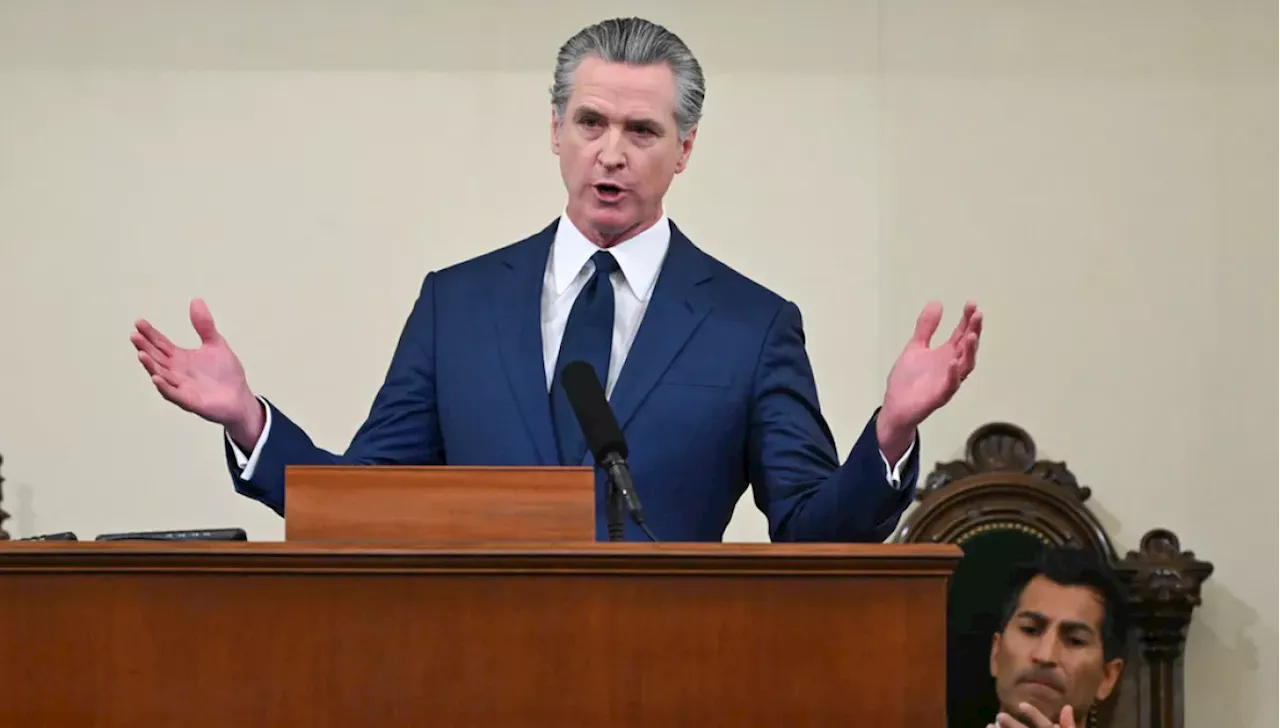
California Governor Gavin Newsom is facing scrutiny over his conflicting messaging as he positions himself for a potential presidential run in 2028. While he presents himself as a reasonable figure in political discussions, his communications team has been accused of promoting inflammatory rhetoric that endangers law enforcement personnel, particularly concerning U.S. Immigration and Customs Enforcement (ICE).
Newsom’s recent comments about ICE operations have raised eyebrows. He referred to certain incidents involving ICE as “state-sponsored terrorism.” This rhetoric emerged following a situation where an activist allegedly interfered with ICE operations, resulting in a confrontation that involved an ICE officer being struck by a vehicle. Critics argue that such language is irresponsible and inflates tensions surrounding immigration enforcement.
In an apparent effort to resonate with the more progressive wing of the Democratic Party, Newsom has adopted a dual approach in his public persona. He has openly stated that he does not support the abolition of ICE, a stance that contradicts the views of some segments of the party. Observers have noted a stark contrast between his public statements and the provocative content circulated by his communications team.
The first episode of his podcast featured conservative activist Charlie Kirk, where Newsom expressed concerns about fairness in sports, specifically regarding the participation of transgender girls in women’s competitions. He labeled it “unfair,” yet his administration continues to endorse policies that support inclusion for transgender athletes. This inconsistency highlights the balancing act he appears to be performing to cater to diverse voter bases.
Newsom’s messaging raises fundamental questions about his political strategy. He champions parental rights in decisions about children’s transitions, advocating for parents who seek medical interventions for their children. Simultaneously, he defends California laws that require teachers to maintain confidentiality regarding students’ gender identities, complicating his stance on parental involvement.
The governor has often criticized former President Donald Trump‘s approach to political discourse, particularly Trump’s divisive rhetoric. Yet, his own communications team has been accused of echoing similar sentiments on social media, leading some to label his campaign as hypocritical. Newsom’s ability to oscillate between being a moderate voice and a progressive agitator has prompted concerns about his authenticity and commitment to any particular ideology.
As Gavin Newsom navigates his presidential ambitions, he must reconcile these contrasting elements of his public image. His willingness to engage in inflammatory rhetoric while simultaneously portraying himself as a sensible leader illustrates the complexities of modern political campaigns. The stakes are high as he seeks to gain the support of both moderate and progressive voters ahead of the upcoming election cycle.
With a growing national spotlight on his actions and statements, the governor’s dual messaging strategy will likely remain a focal point of discussion as the race for the White House heats up.
















