









































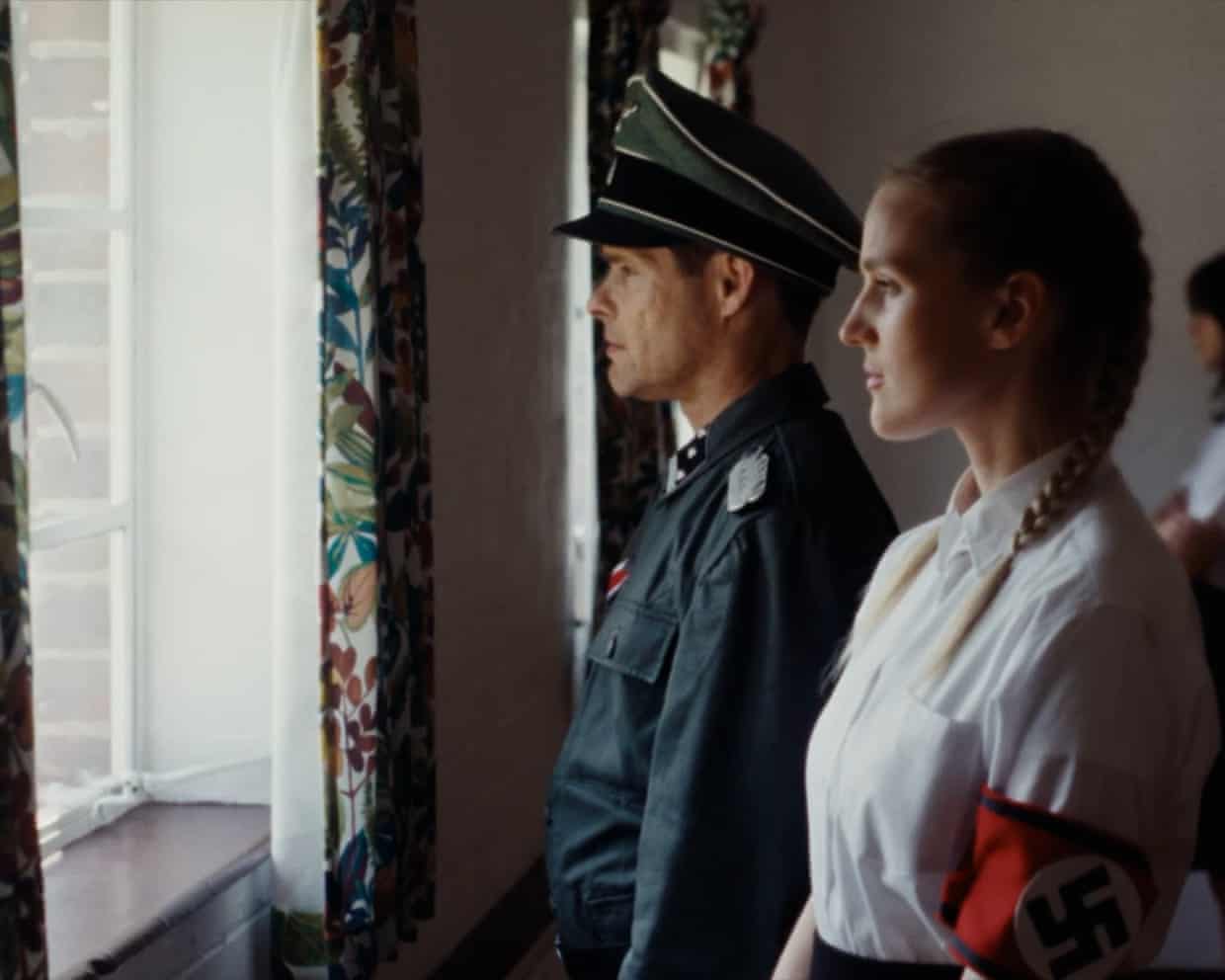
The recently released film Aryan Papers, directed by Danny Patrick, has sparked considerable criticism for its portrayal of Holocaust themes. Set during World War II, the film attempts to explore the grim realities of the Nazi regime but ultimately falls short in execution. It becomes clear that this effort is unlikely to leave a lasting impression on audiences or critics alike.
This film should not be confused with the unrealized project by Stanley Kubrick, which was based on the novel Wartime Lies by Louis Begley. Kubrick’s version, which has been referenced in discussions about Holocaust-themed cinema, was abandoned partly due to concerns about box office performance after the release of Schindler’s List. Current director Luca Guadagnino is rumored to be working on a new adaptation of the same title, but Patrick’s Aryan Papers does not seem to pose any competitive threat.
The narrative of Aryan Papers unfolds primarily in Stuttgart in 1942, focusing on the Lebensborn programme, which aimed to breed Aryan children by pairing young women with Nazi officers. The film follows Gisella, played by Celia Learmonth, as she attempts to rescue two Jewish youths, Benjamin and Judith, from imminent danger. Despite having the potential for a gripping story, the film suffers from significant flaws.
Critics have pointed out that the script lacks depth and coherence, often resembling a poorly constructed draft. The film’s editing also raises questions, as its disjointed timeline creates confusion rather than clarity. Locations used in the film do not convincingly represent the historical period, with modern elements, such as visible plastic wheelie bins, detracting from the overall authenticity.
Acting performances further exacerbate the film’s shortcomings. Many critics have noted that the cast appears under-rehearsed, leading to lacklustre and monotone portrayals. It gives the impression that the casting process was haphazard and that the actors were inadequately compensated for their work. This lack of professionalism undermines the film’s serious subject matter, which many feel should have been treated with greater respect.
While there is a sense that the filmmakers approached this project with a degree of sincerity, the execution is viewed by many as insulting to the memory of Holocaust victims. The film is set to be available on digital platforms starting January 26, 2024, but it remains doubtful whether it will resonate positively with audiences.
In summary, Aryan Papers is a film that, despite its intentions, struggles significantly in both storytelling and production values. Its release is unlikely to contribute meaningfully to the discourse surrounding Holocaust narratives in cinema.
















