









































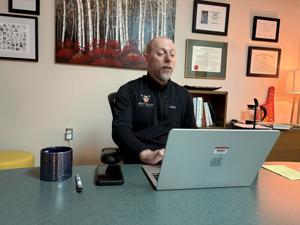
West Valley High School, located in Fairbanks, Alaska, has taken significant steps to combat vaping among students by implementing a new bathroom policy in January 2026. The initiative involves restricting the number of accessible bathrooms and placing monitoring personnel outside to oversee student activities. According to Principal Mark Winford, this strategy aims to curb vaping, reduce student congregating, and address what he described as “general naughtiness.”
In the eight days since the policy was enacted, incidents of vape detection have decreased by an impressive 96%. Winford expressed optimism about maintaining this downward trend, stating, “I’m proud of the students’ adjustment and very satisfied with the system we came up with.” The school district has installed vape sensors in every middle and high school bathroom, which alert administrators when vape smoke is detected.
Previously, West Valley’s sensors recorded an alarming average of 452 alerts daily, drastically outpacing other nearby schools like North Pole High School and Lathrop High School, which recorded 13 and 53 alerts, respectively, in October 2025. This stark contrast prompted Winford to investigate effective measures other schools had adopted.
To address the issue, the administration has implemented a multi-faceted approach focused on increased supervision. Currently, only four bathrooms are open during morning and after-school hours, with two designated for boys and two for girls. During class time, only one bathroom of each gender is accessible, while during transition periods, three of each are available. This limited access ensures that administrators, safety assistants, and custodians are present to monitor student activity.
“If an adult is present just outside the bathroom, the kids know that there’s an adult nearby and they’re much less likely to vape or do something inappropriate,” Winford explained. Rod Gray, a Safety Assistant at the school, noted that prior to the new policy, bathrooms had become social hotspots, often overcrowded with students. “You’d walk in and a lot of times kids are just hanging out in the bathrooms,” he recalled.
The policy has also significantly reduced the number of fights and litter typically found in the bathrooms. Teachers have adopted an electronic pass system to manage student bathroom visits, further curbing unnecessary traffic. If a student attempts to enter the bathroom without an activated pass, they are instructed to return to class until permission is granted.
Consequences for students caught vaping are clearly defined. On their first offense, students must write an essay about the negative effects of vaping, with escalating penalties for subsequent violations, potentially leading to suspension. Athletes face additional repercussions in accordance with Alaska School Activities Association policies.
Despite the initial success of the new policy, there remains a gap in addressing addiction and prevention strategies. Beth Sprankle, the school’s restorative coordinator, acknowledged the effectiveness of the policy in reducing vape sensor alerts but emphasized the need for educational initiatives to tackle addiction. “We’re not addressing addiction yet, but that’s the next thing on the table,” she stated.
While the policy has made strides, some students have expressed frustration over the limitations on bathroom access. Student Grace Jolley mentioned the inconvenience of long lines and the difficulty of navigating the school to find an open bathroom. “Having only one bathroom open and it being the upstairs one, that’s not enough to make up for the amount of students there are,” she said.
Winford has committed to listening to student feedback and making necessary adjustments to the policy. With only eight days into the semester, he is pleased with the progress made, stating, “To have gone from data that concerning to averaging below one alert a day is something that we’re really proud of, and something that will really positively change the culture of the school.”
















