









































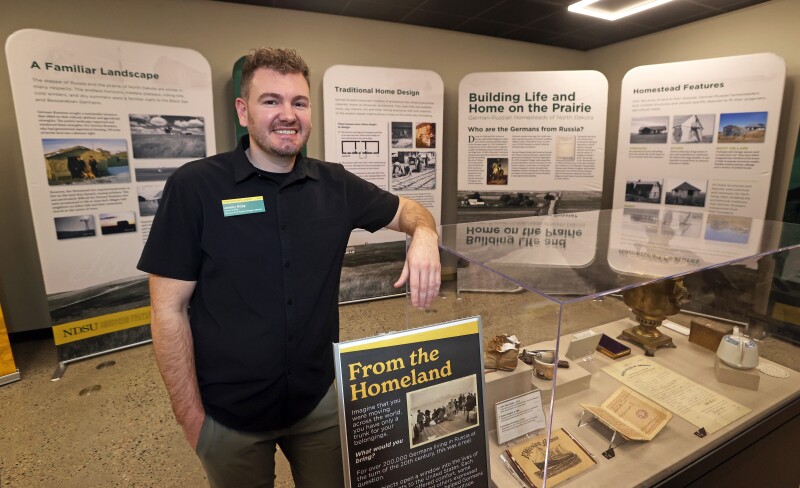
A virtual tour of the Germans from Russia Heritage Collection will soon be accessible to audiences worldwide, thanks to a grant of $9,950 from the ND250 Community Initiatives Grant program. This funding will enable the creation of a 360-degree online experience of the permanent exhibit located at North Dakota State University (NDSU), which highlights the significant contributions and history of German-Russian immigrants in the region.
The exhibit serves as a cultural touchstone for communities in North Dakota, especially in counties such as Emmons, McIntosh, and Logan, where many German-Russian descendants reside. As Jeremy Kopp, interim director of the Germans from Russia Heritage Collection, noted, “Not every student in North Dakota can drive all the way to Fargo to see our exhibit… We wanted to provide an opportunity for students, for researchers, for the greater Germans from Russia community, and really anyone interested in history, to experience the exhibit.”
Virtual Experience to Enhance Accessibility
The virtual tour aims to replicate the experience of visiting the physical exhibit. Kopp emphasized the importance of making history accessible: “The goal of the virtual exhibit is to give people the feel of the real exhibit, the opportunity to… see the exhibit as it stands currently.” This initiative allows individuals from various locations, including those unable to travel, to engage with North Dakota’s rich history.
The online component will be developed by the same company responsible for creating the virtual tour of the new Teddy Roosevelt Presidential Library, set to open on July 4, 2026. The shared design features will facilitate navigation for visitors exploring North Dakota’s historical narratives.
The grand opening of the permanent exhibition at NDSU’s library is scheduled to coincide with the Germans from Russia convention in Fargo, taking place from July 15 to 18. The exhibit’s physical display will extend along the hallway from the Germans from Russia Heritage Collection, allowing for an expanded showcase of materials.
Highlighting Cultural Heritage Through Storytelling
A key feature of the exhibit will be the Dakota Memories Corner, which includes interviews with numerous German-Russian individuals about their formative experiences in North Dakota. Kopp, who has been involved with the collection since 2010, expressed the significance of these narratives. “Without the Germans from Russia, certainly agriculture wouldn’t be our largest industry,” he said, referencing the cultural impact of German-Russian traditions such as knoephla soup and kuchen.
The virtual tour will not only spotlight the permanent exhibition but will also incorporate informational video clips, including segments from the 11 documentaries produced in collaboration with Prairie Public Broadcasting. This multimedia approach aims to enrich the viewer’s understanding of the German-Russian experience.
Kopp highlighted the broader mission of the initiative, stating, “At the end of the day, our mission is to share and preserve the history and culture of the Germans of Russia in North Dakota and the Northern Plains.” He emphasized the importance of connecting with audiences, whether they share this history or are discovering it for the first time.
Wyatt Atchley, special collections archivist, echoed this sentiment, noting, “The physical location will be beautiful, but having people be able to access it online is really important. We can share it with everybody across the world.” He underscored the need to make this regional story widely accessible, as immigrant narratives resonate universally.
The ND250 Grant Program, administered by the State Historical Society of North Dakota, supports initiatives celebrating the 250th anniversary of the Declaration of Independence. In addition to the Germans from Russia Heritage Collection, the program awarded funds to various projects, including educational storyboards in Carrington and a concert celebrating American diversity.
As the virtual tour prepares to launch in the fall, ideally during Homecoming week, it promises to engage a diverse audience in the rich tapestry of North Dakota’s history and the vital role played by German-Russian immigrants.
















