


























President Donald Trump’s Compact for Higher Education has faced significant rejection from elite universities, yet it has found a receptive audience among historically Black colleges and universities (HBCUs). As of November, Oakwood University in Alabama has emerged as one of the few institutions to express interest in the initiative, highlighting a willingness to engage with the compact’s aims while raising concerns over specific provisions.
On November 18, 2023, Oakwood University’s president, Gina Brown, communicated the school’s interest to the U.S. Department of Education, stating that the institution aligns with the compact’s vision of promoting student success and accountability. However, she also requested exemptions from certain stipulations, particularly concerning admissions practices. “Absent a mission-based exemption, HBCUs would face an untenable choice between compliance and fulfilling their congressionally mandated purpose,” Brown noted, emphasizing the delicate balance between adhering to the compact and maintaining the institution’s historic mission.
Unveiled in October 2023, the compact invites nine universities to commit to a set of priorities in exchange for benefits such as substantial federal grants. The provisions within the compact include maintaining institutional neutrality, upholding civil rights laws, and requiring standardized test scores for applicants. Additionally, it proposes a 15 percent cap on international undergraduate students and mandates a freeze on tuition for five years. Institutions that sign the compact would gain a competitive edge, including priority access to federal grants and invitations to events at the White House.
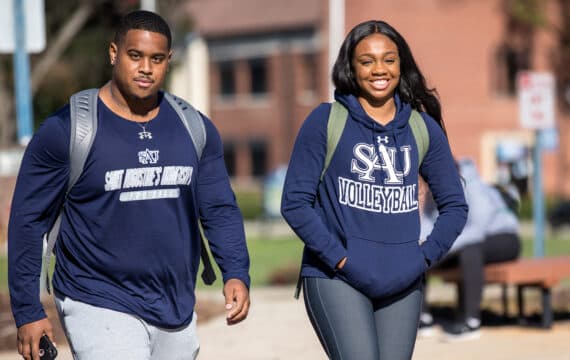
Despite the potential benefits, the compact has faced backlash, even from some conservative supporters of the administration’s education reforms. None of the original nine institutions agreed to participate, prompting the government to broaden the invitation to any American institution willing to comply. Oakwood University is now among the few HBCUs considering participation, alongside St. Augustine University in North Carolina, which also expressed interest in early November.
In her correspondence with the Trump administration, St. Augustine’s interim president, Verjanis Peoples, echoed Oakwood’s sentiments, supporting the compact’s overarching goals of strengthening academic excellence and accountability. However, she raised similar concerns about the restrictions on race and ethnicity in admissions. “The Compact’s current restrictions… conflict with Title III of the Higher Education Act and with the explicit purpose of HBCUs to expand access for Black students and historically marginalized communities,” Peoples stated.
Both universities have signaled their eagerness to collaborate with the government to refine the compact’s provisions, ensuring they align with the missions of HBCUs. “With thoughtful collaboration, the Department and participating institutions can refine the Compact to ensure that its implementation is rigorous, mission-aligned, and inclusive of the Nation’s diverse higher education landscape,” Peoples added.
Other institutions reportedly considering the compact include New College of Florida and Valley Forge Military College. In contrast, the original nine universities that declined or did not publicly accept the compact include prestigious names like Vanderbilt University, the University of Pennsylvania, and Dartmouth College. University leaders cited concerns regarding academic freedom and institutional independence as critical factors in their rejections.
Suresh Garimella, president of the University of Arizona, stated in an open letter that “principles like academic freedom, merit-based research funding and institutional independence are foundational and must be preserved.” He acknowledged the need for thoughtful consideration of some provisions but maintained that the integrity of academic institutions must remain intact.
As discussions around the compact continue, the response from HBCUs will be closely monitored, as their participation could significantly shape the future landscape of higher education in the United States.