

































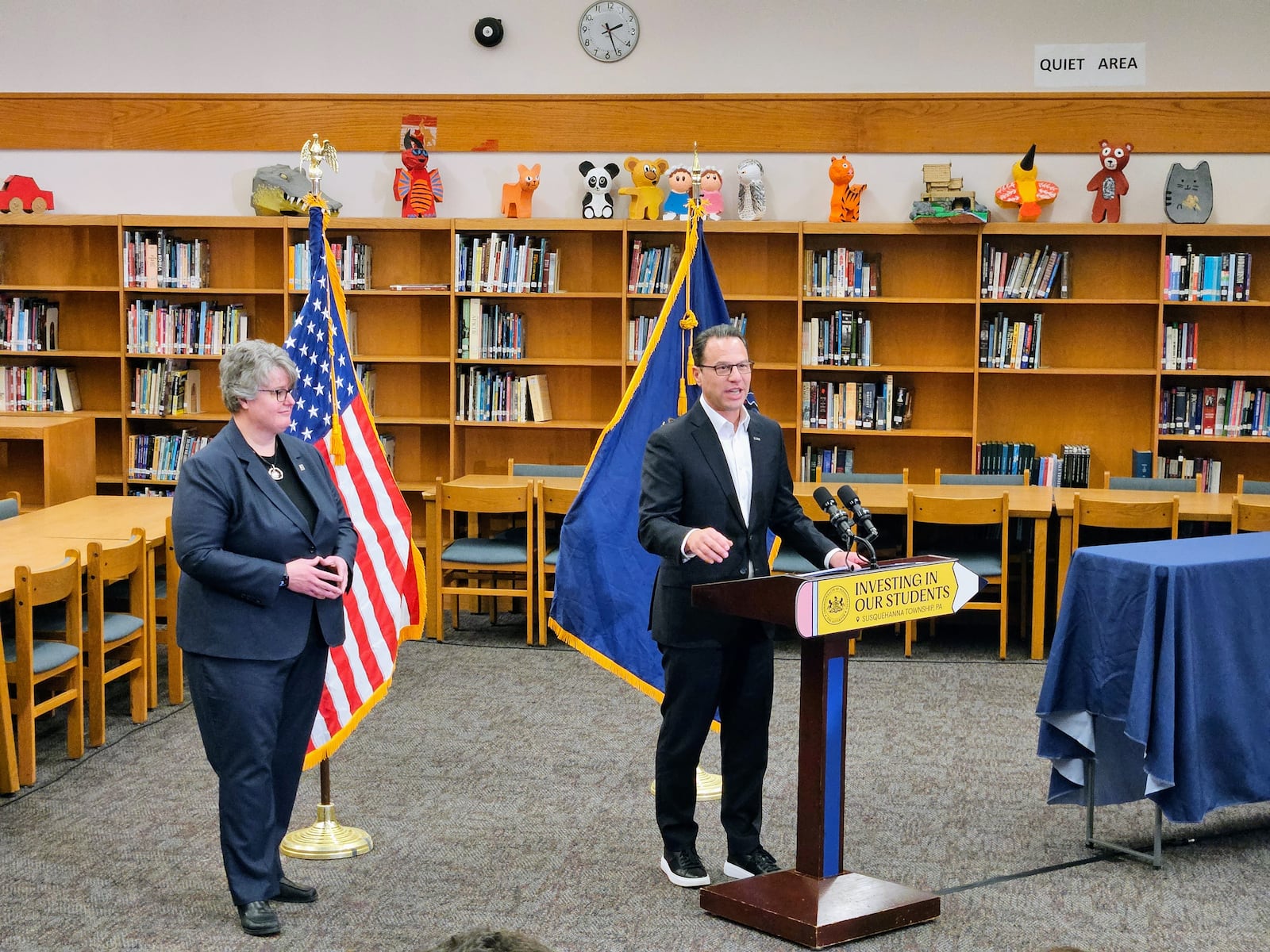
Pennsylvania Governor Josh Shapiro visited Susquehanna Township High School on November 15, 2023, to highlight the impact of significant education funding increases. With just two months until the next state budget cycle, which is expected to spark further discussions about funding, Shapiro engaged with students and teachers for over an hour before delivering formal remarks in the school library.
The recent budget, finalized in November, ended a four-month fiscal impasse and allocated over $700 million in new baseline K-12 assistance to school districts. It also included revisions that generated millions in net savings for districts accommodating students who choose to attend cyber charter schools. These funding increases stem from a landmark court decision that deemed Pennsylvania’s school funding system unconstitutionally inequitable.
As Shapiro noted, Susquehanna Township’s state aid rose from just over $7 million when he assumed office to more than $12 million in the latest budget. He praised the district for its effective use of these funds, which have facilitated the hiring of additional school counselors and special education instructors. Superintendent Tamara Willis mentioned that an increasing number of students require additional academic support.
Significant investments have also been made to upgrade outdated heating and cooling systems, addressing both classroom comfort and rising energy costs. One standout initiative is the district’s Cadet Teacher Program, which has recently doubled in size. This job training initiative allows high school students to serve as teaching assistants in elementary schools, with some students being hired by the district post-graduation.
Cole Hunsberger, a participant in the Cadet Teacher Program, shared a touching moment when one of his kindergarten students grasped the pronunciation of the letter “G.” “I’ll never forget that moment,” Hunsberger remarked, emphasizing the joy of witnessing students’ learning breakthroughs.
Shapiro’s funding increases represent approximately a 7% boost for K-12 education compared to the previous year’s budget. The largest portion of this increase is designated for newly created adequacy and tax equity funding formulas, aimed at addressing previously identified funding shortfalls. Susquehanna Township received nearly $1.9 million in additional adequacy funding this budget cycle, totaling around $675 more per student when factoring in other allocations.
The political landscape surrounding education funding in Pennsylvania has been contentious. The Democratic-majority House and Republican-majority Senate have engaged in heated debates over the budget. Republicans criticized Shapiro’s proposals as excessive, warning that they could lead to unsustainable deficits. Nonetheless, the $50.1 billion budget passed last month included a roughly 4.7% year-on-year increase in the general fund allocation.
Shapiro’s administration faces similar challenges as it approaches the next budget cycle, set to begin in early February. He is expected to propose further increases in education funding, in alignment with the court ruling. When asked about potential Republican resistance to his educational spending plans, Shapiro responded, “I don’t know that it is useful for me to get into the back and forth we had behind the scenes,” but emphasized the importance of continued dialogue in advocating for public education.
Senator Patty Kim, representing Dauphin County, noted that while the recent budget agreement was broadly bipartisan, questions about the necessity of increased educational funding persist. She highlighted the critical need for additional resources, particularly in her district, which includes financially struggling school systems such as Harrisburg City and Steelton-Highspire. “We need to have the support from the state,” Kim stated, underscoring the challenges even less distressed districts like Susquehanna Township face in meeting educational needs.
The visit to Susquehanna Township underscores the ongoing commitment to enhancing educational funding in Pennsylvania and the critical role it plays in shaping the future of its students.