









































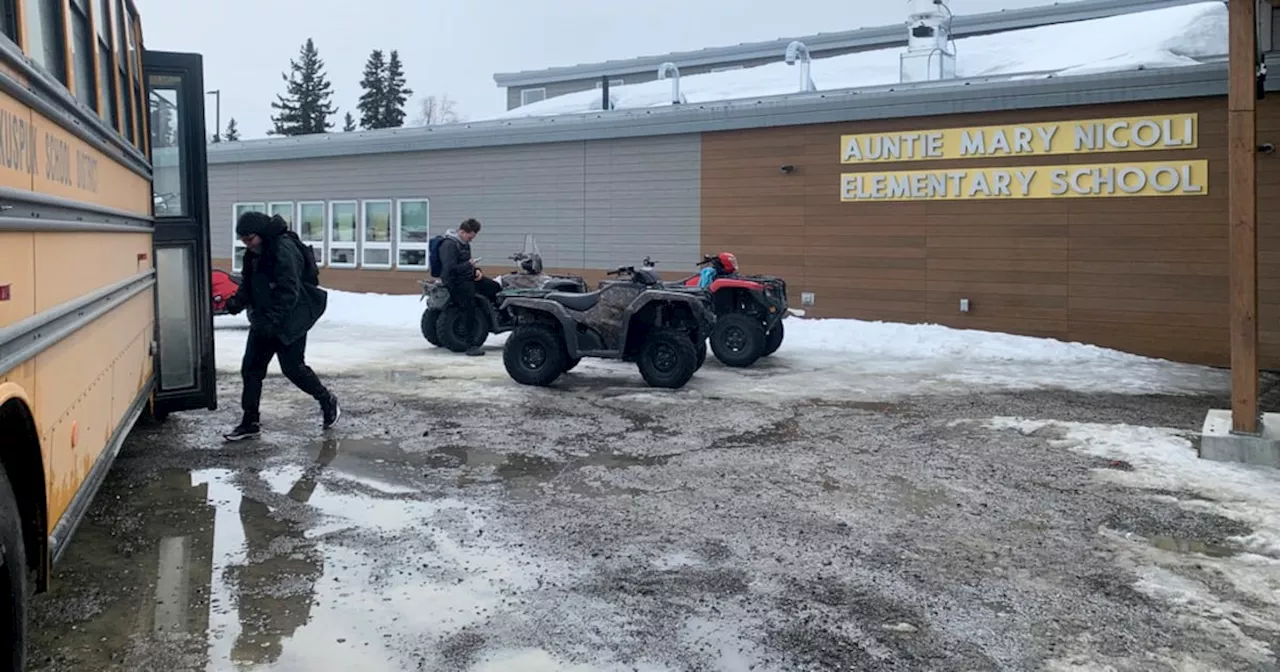
Two school districts in Alaska have filed a lawsuit against the state, claiming it has failed to meet its constitutional obligations regarding public education funding. The Fairbanks North Star Borough School District and Kuspuk School District are seeking an injunction to compel the state to provide adequate financial support to ensure that Alaska students receive “a sound basic education.”
The complaint was lodged in Anchorage Superior Court on Tuesday, coinciding with the opening of the 2025 legislative session in Juneau. The districts argue that the state has consistently underfunded public education, thereby violating the rights of students to a meaningful education in essential subjects.
The lawsuit asserts that “the state is failing to meet its constitutional obligation” to provide adequate funding, which is necessary for a sound basic education. The plaintiffs are advocating for a declaratory judgment affirming that the state is in violation of the Alaska Constitution, alongside a request for a court-ordered adequacy study to assess the true costs of educating students.
Matt Singer, the trial attorney representing the plaintiffs, emphasized the need for a comprehensive adequacy study, stating, “If you don’t know what something is going to cost, then you can’t have a conversation with the Legislature about how to fund it.”
Inadequate funding has led to significant challenges for schools, including low proficiency assessment scores, reductions in teaching staff, and the elimination of essential programs such as fine arts and vocational education. The lawsuit also highlights deteriorating conditions within school facilities, which have been exacerbated by years of chronic underfunding.
Madeline Aguillard, Superintendent of the Kuspuk School District, noted the impact of budget constraints on rural schools. “The last eight years, we’ve experienced a governor that has put forward a zero dollar budget going into budgeting,” she stated, referring to the detrimental effects of insufficient state funding.
The plaintiffs are calling on the Alaska Legislature to prioritize education funding. Luke Meinert, Superintendent of the Fairbanks North Star Borough School District, remarked, “We’re calling on this year’s Legislature to continue to work on that issue. They have the power to do so.”
Education Commissioner Deena Bishop did not provide immediate comment on the lawsuit. In previous statements, she has indicated that her department does not control the allocation of education funds, suggesting that the Legislature holds that responsibility.
The Coalition for Education Equity, a nonprofit organization that is financing the lawsuit, argues that legislative advocacy has not sufficiently addressed the funding crisis in Alaska. Executive Director Caroline Storm stated, “Legal action is not the only way, but it raises public awareness.”
According to Article VII of Alaska’s Constitution, “the legislature shall by general law establish and maintain a system of public schools open to all children of the State.” The lawsuit claims that for years, the state has failed to uphold this mandate.
Data within the complaint reveals alarming statistics regarding student performance in the Kuspuk School District, where approximately 90% of students were not proficient in key subjects during the 2024-25 school year. Aguillard highlighted the impact of chronic underfunding, particularly on Indigenous students, stating that the district has faced numerous challenges, including unsafe school facilities.
Concerns over the structural integrity of school buildings have also been raised. Aguillard mentioned that during a recent inspection, significant issues were identified that could lead to the collapse of a school gym in Aniak.
The broader implications of inadequate funding extend beyond rural districts. Meinert described the challenges faced by the Fairbanks North Star Borough School District, which has had to close seven schools in the past five years due to budget deficits. He expressed concern that the lack of state support disproportionately affects minority students, with over 76% of Indigenous and economically disadvantaged students in his district not meeting proficiency standards in core subjects.
As the new legislative session unfolds, the outcome of this lawsuit could have substantial implications for the future of public education in Alaska, particularly for the state’s most vulnerable student populations.
With increasing pressure on lawmakers to address these pressing issues, the plaintiffs hope their legal action will catalyze a much-needed dialogue about the adequacy and equity of education funding across the state.
















