









































CLEVELAND, N.M. — New Mexico is experiencing a surge in outdoor learning initiatives aimed at addressing mental health concerns and the increasing prevalence of technology in education. One notable development is the establishment of the Collins Lake Outdoor School in Mora County, which plans to enroll 35 students in its K-4 program, having received state charter approval in August. The school, founded by Chris Smaby, features classrooms housed in yurts and outdoor learning environments that include canoes positioned by a nearby lake.
While the school faces challenges, including staffing and curriculum development, Smaby remains optimistic about the potential for outdoor education to benefit students. He believes that nature offers invaluable learning experiences. “There’s so much in nature that they can learn,” he stated during a recent tour of the school’s forested campus, where remnants of wildfire-scorched peaks can be seen.
Supporters of outdoor education cite research that highlights its academic and behavioral benefits, particularly as students increasingly engage with digital learning tools. This growing movement gained momentum in New Mexico in 2019, when state lawmakers established the Outdoor Recreation Division. Siah Correa Hemphill, a former state senator from Silver City, has been a key advocate for integrating outdoor education into schools, introducing legislation to fund outdoor learning programs, which received backing in the state budget.
The support for outdoor education has expanded under the leadership of Governor Michelle Lujan Grisham, who designated an “Outdoor Learning Week” in October. This year, the Outdoor Recreation Division awarded nearly $2.2 million in Outdoor Equity Grants to 61 programs, aimed at providing outdoor educational opportunities to more than 22,000 youth, particularly targeting low-income families and tribal communities. Since 2020, the division has allocated over $40 million through various programs, surpassing the funding provided by the Public Education Department’s outdoor learning grant.
Local initiatives have also benefited from this movement. The Monte del Sol Charter School in Santa Fe received $40,000 for outdoor activities, including ski trips and visits to Chaco Canyon, while the nonprofit Partners in Education secured $35,000 to support field trips for Santa Fe Public Schools.
The push for outdoor education has deep roots in New Mexico’s culture. At a ceremony held at the Santa Fe Indian School in November, Waylon Brown, Secretary of the Taos Pueblo War Chief, emphasized the integral connection between education and the natural world. “The outdoors: the wind, the sun, moons — the stars — all the elements coincide with education,” he remarked, highlighting the importance of preserving outdoor learning traditions.
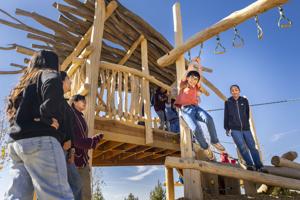
The Santa Fe Indian School is currently developing an outdoor project that incorporates student feedback. The initiative features a wooden gazebo constructed with logs donated by the Taos Pueblo and includes climbing bars and swings, all designed to enhance students’ connection to their environment. Superintendent Christie Abeyta noted that outdoor education fosters greater engagement among students, stating, “They’re in our mountains, by the streams, near the rivers — the sacred spaces that really promote the core values and the cultural heritage that we’re ingrained in.”
Abel Herrera, a 17-year-old student from Cochiti Pueblo, expressed the need for more engaging educational environments. He described the project as a “gift” that brings a tactile experience back to learning. “Sometimes you just got to push school and work aside and focus on what’s important: our kids and laughter,” he said.
This initiative is part of a broader effort led by the Trust for Public Land, collaborating with the Bureau of Indian Education to develop nine schoolyard projects at tribal and Pueblo schools, utilizing nearly $3.5 million in federal funding from the Inflation Reduction Act. This year, Wingate High School and Wingate Elementary, both serving Navajo Nation communities, are among the schools involved in this collaborative effort.
U.S. Senator Martin Heinrich, who has introduced the “Living Schoolyards Act” twice, emphasized the importance of outdoor spaces in education. He noted that youth outdoor time is “in constant decline,” with children aged 8 to 18 spending an average of 7.5 hours daily in front of screens. His efforts to secure funding for outdoor learning projects nationwide have gained traction, though the legislative process has faced challenges.
Despite a more challenging federal grant environment, the momentum for outdoor education is building. Amanda Keith, board chair of Environmental Education of New Mexico, expressed her concerns regarding federal cuts to environmental programs. She noted that organizations have faced difficulties as funding priorities shift, impacting staff capacity and ongoing projects.
In Santa Fe, school leaders are increasingly reassessing the role of technology in education, prompted by discussions with parents concerning student mental health. While district officials continue to invest in digital tools, they are forming a task force to explore the impact of mobile phones in schools and recently adopted a “digital wellness” resolution. Board Vice President Kate Noble highlighted the urgency of these discussions, linking outdoor education as a crucial counterbalance to excessive screen time. “Sometimes it feels distressing,” she remarked, reflecting on the need for a renewed connection with nature and the outdoors.
As New Mexico’s outdoor learning initiatives evolve, they represent a significant shift toward integrating nature into the educational experience, promising to enhance student well-being and engagement in the process.
















