











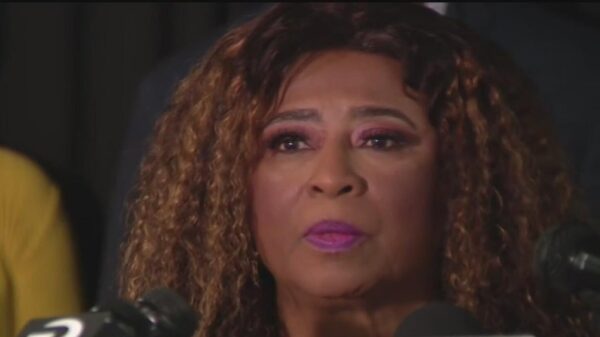



























Recent discussions surrounding education funding in New Hampshire have ignited debate among lawmakers and educators. Representative Michael Cahill highlighted concerns that the current educational policies, particularly regarding Education Freedom Accounts (EFAs) and charter schools, could lead to significant financial ramifications for the state. With the implementation of these programs, the state now faces the potential loss of millions in taxpayer dollars.
House Majority Leader Jason Osborne and Craig Hulse have praised the growth of EFAs, which are now available without income restrictions. Their articles in late September and early October, respectively, argue that these changes represent a new era in educational choice. Meanwhile, Andrew Cline, chair of the State Board of Education, champions charter schools as a viable option for many students in New Hampshire.
Cline’s comments have drawn attention to a commonly used metaphor in legislative discussions: the “camel’s nose under the tent.” This phrase suggests that small initial steps could lead to larger, unintended consequences. In this case, the push for school choice, including EFAs and charter schools, raises questions about the long-term impact on traditional public schools.
Historically, New Hampshire’s public schools have been recognized for their quality, often ranking among the top five nationally. Approximately 150,000 students rely on these district schools, which are primarily funded through property taxes. While a decline in enrollment has been noted, this trend is attributed to demographic shifts and economic challenges rather than an exodus from public education.
The implementation of EFAs, which provide families with $5,000 annually for educational expenses, has not significantly drawn students away from public systems. Most recipients of EFAs were already either homeschooled or enrolled in private institutions. The funding, while helpful, does not cover the full costs associated with private schooling or homeschooling.
Concerns have arisen regarding the oversight of the EFAs. The Children’s Scholarship Fund, which administers the program, charges a 10% commission for its services and was established as an external entity with limited state oversight. A preliminary audit revealed irregularities in a sampling of applications, prompting further scrutiny of the program’s efficacy.
Governor Kelly Ayotte initially proposed a requirement for students to complete one year in a public school or charter school before utilizing EFAs. This “try before you buy” approach was ultimately rejected by the majority party in the legislature. Originally designed to assist families with incomes up to 300% of the federal poverty level, the program has now expanded to include all students, regardless of financial status.
Despite claims of improved performance in charter schools, recent state assessments indicate that both charter and district schools in New Hampshire exhibit similar academic outcomes. For instance, in 2024, the average scores for 4th grade math were 457 in district schools compared to 442 in charter schools. Reading scores were 602 and 599, respectively. In 8th grade assessments, district schools again outperformed charter schools in both math and reading.
While charter schools can serve specific educational missions, they do not replace the need for robust public education systems. Critics argue that the allocation of $46 million to expand charter schools, alongside $9,000 per student in state aid for charters, diverts much-needed funds from traditional public schools. District schools receive only $4,200 per student, leaving families to shoulder the remaining costs.
In summary, the current education policies in New Hampshire, particularly the expansion of EFAs and charter schools, raise significant questions about accountability and financial stewardship. As funding is redirected, the long-term implications for the state’s public education system and the children it serves remain a critical concern. The ongoing dialogue among lawmakers and educators will likely shape the future landscape of education in New Hampshire.