









































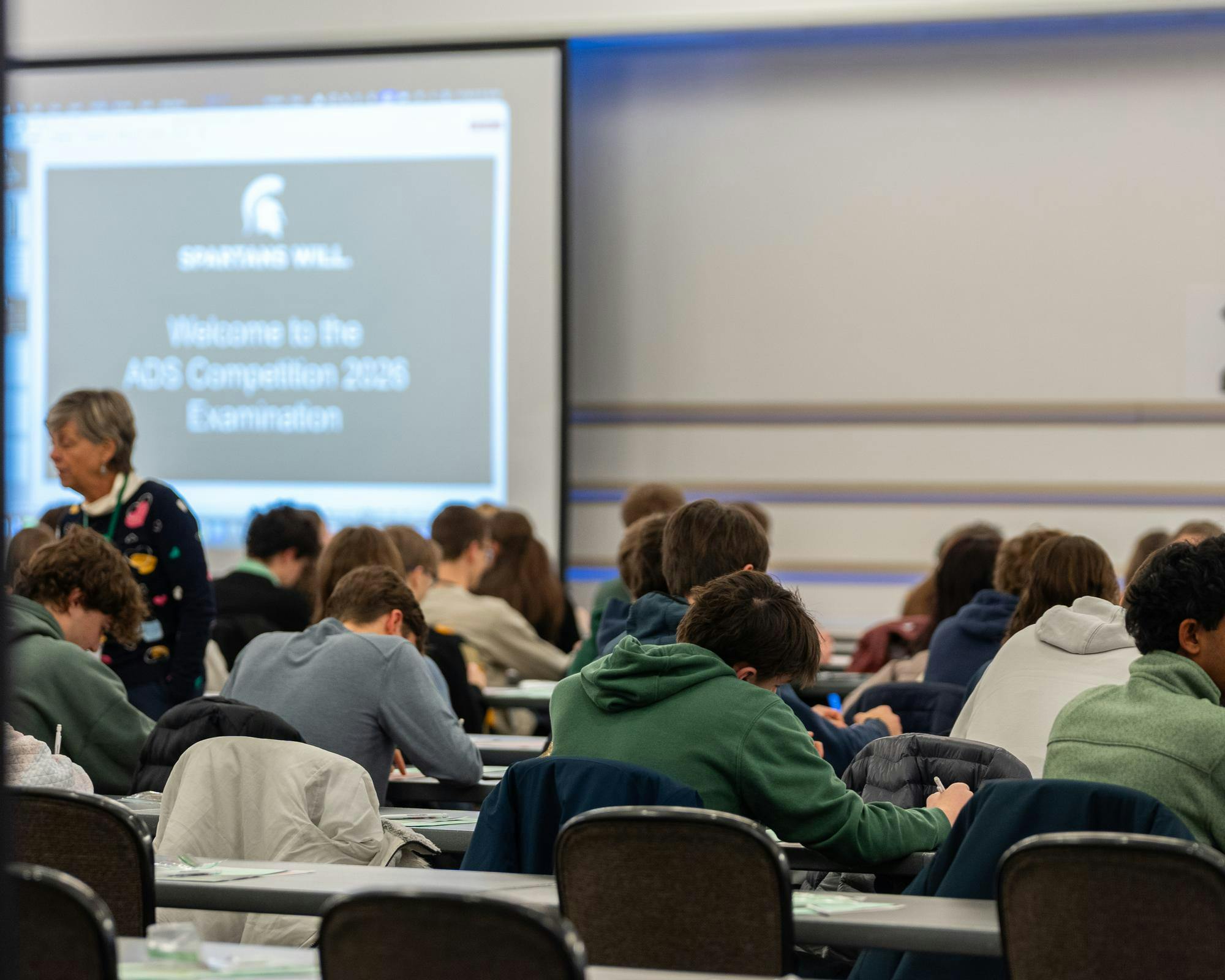
Michigan State University (MSU) has taken an unconventional approach to attract high-achieving students through its Alumni Distinguished Scholarship (ADS) Competition. On a recent chilly morning in East Lansing, hundreds of high school seniors gathered, equipped with the hope of securing a full-ride scholarship that encompasses tuition, housing, and dining for four years. The unique twist? A challenging general knowledge test designed to assess their intellect in a seemingly random manner.
The ADS Competition invites approximately 4,000 students annually, with around 1,000 making the journey to compete. These invitees are typically in the top 5% of their graduating class and have demonstrated exceptional academic performance, including SAT scores averaging around 1450 or ACT scores around 32. Although all participants have already been accepted to MSU, this competition provides an opportunity to vie for one of 45 coveted full-ride scholarships.
The stakes are high, with the winning package offering not only financial assistance but also access to professorial assistantships, which provide paid positions collaborating with faculty on research and teaching. The day unfolds in two distinct acts: a rigorous morning examination followed by an afternoon filled with tours and presentations aimed at showcasing MSU’s advantages and the benefits of joining the Honors College.
As students grapple with the test, they find themselves confronted with questions that often defy preparation. According to Jess Brandt, the assistant director of admissions for the Honors College, the test consists of around 50 questions derived from various faculty across the university. The exact content of the exam remains a mystery, as only the proctors have access to it. Brandt has expressed her frustration at not being allowed to view the test, describing it as “a secured document.”
Student accounts reveal a mix of familiar academic subjects and obscure inquiries. Participants reported questions on topics ranging from chemistry and history to the interpretation of poetry and the cultural significance of historical artifacts. Evan Yeh, a competitor from Grand Rapids, mentioned guessing on some of the more challenging questions, such as identifying architectural styles from images.
In addition to the exam, students must submit essays responding to prompts created by current Honors College students. This year’s prompts included creative ideas for new ice cream flavors, each linked to charitable causes. Elise Russell proposed a lavender-honey flavor supporting environmental efforts, while Brodie Chase pitched a “Second Glance” flavor that would raise awareness for mental health.
Following the testing phase, approximately 125 students advance to interviews, and about 45 scholarships are awarded. The university plans to announce the winners publicly in June 2025.
Despite the rigorous nature of the test, many students expressed uncertainty regarding their performance. After the exam, Olivia Anderson shared her thoughts: “It was interesting, but I felt it was weird.” Others echoed her sentiments, describing the questions as broad and challenging. William Daily, who flew in from Olympia, Washington, recalled feeling overwhelmed by the test and doubted its worth. Yet, he was surprised to learn weeks later that he was a finalist and ultimately won a scholarship, now studying engineering at MSU.
Previous winners have similar experiences, often leaving the test convinced they had failed. Many attempted to prepare by reviewing past coursework or seeking tips from online forums, but found little success. The ADS test appears to favor those who can think critically and adapt, rather than rote memorization of facts.
As for the purpose of the test, opinions vary. While some students believe it assesses a wide-ranging knowledge base, others argue it serves a recruiting function for MSU. According to Brandt, the ADS Competition is strategically timed to coincide with other universities’ admissions offers, drawing high-achievers to the campus for a day of engagement and exposure.
The event not only aims to reward exceptional students but also to cultivate a sense of belonging and community. Many participants, such as Henry Tighe, who won a full scholarship, expressed that the day felt different from standard college visits. Meeting real professors and engaging in meaningful discussions contributed to a unique experience that highlighted MSU’s commitment to its students.
MSU further enhances its appeal by enlisting former ADS winners as ambassadors for the Honors College. These “ADS student leaders” share their experiences and insights with prospective students, emphasizing the personal touch that sets MSU apart from other institutions. Noah Forman, a student leader and scholarship winner, actively engages with candidates, sharing his journey and underscoring the value of choosing MSU.
In conclusion, Michigan State University’s Alumni Distinguished Scholarship Competition exemplifies a creative strategy to attract top talent. By blending a challenging examination with immersive engagement, MSU not only identifies promising candidates but also fosters a welcoming atmosphere that encourages students to envision their future at the university. As recruitment efforts continue to evolve, the ADS program stands as a significant initiative in higher education, appealing to students seeking both academic excellence and a sense of community.
















