




































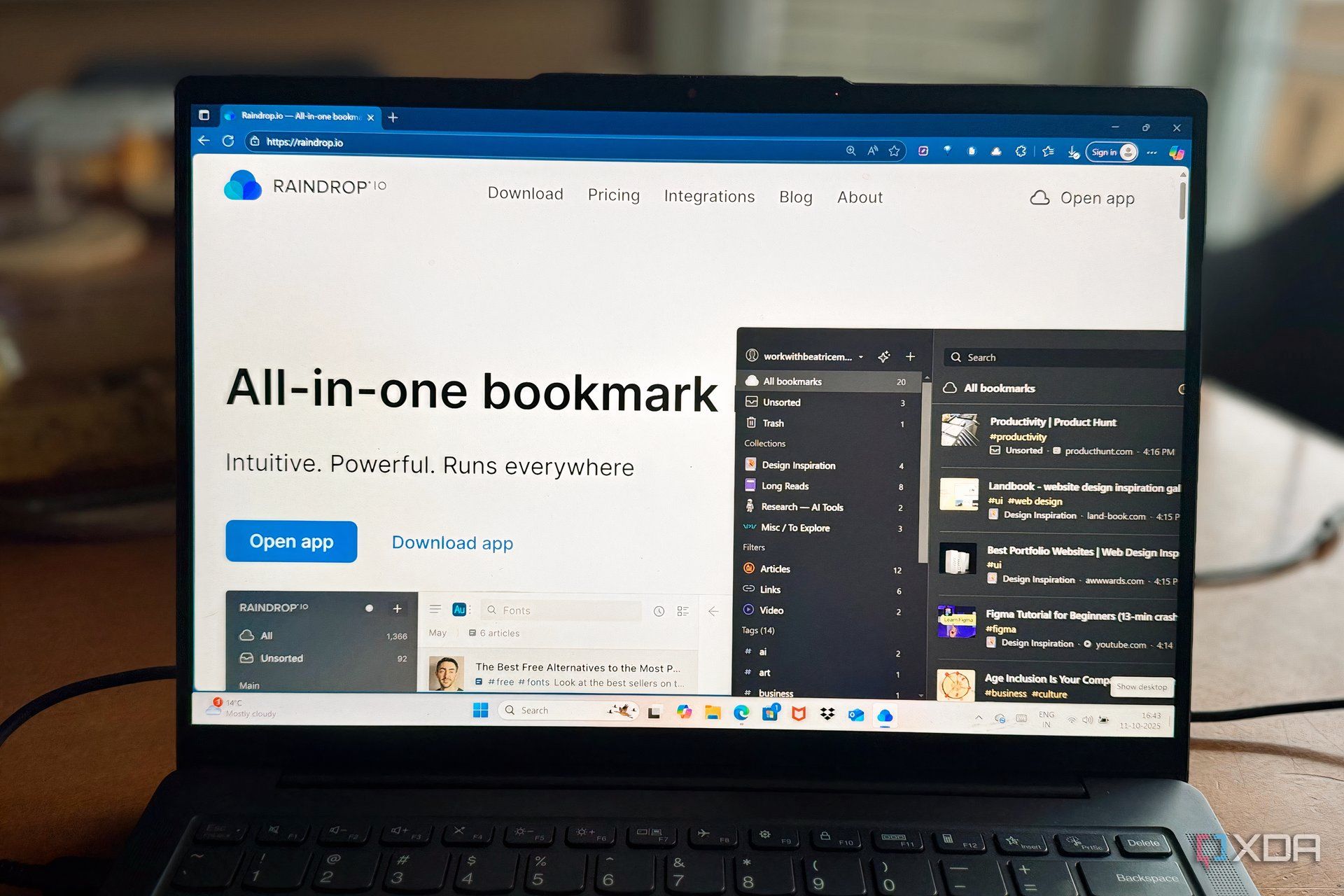
Many knowledge management systems promise efficiency but often overwhelm users with complexity. Raindrop.io, typically seen as a simple bookmarking tool, is gaining attention for its potential as a minimal personal knowledge management (PKM) system. Users like one individual have discovered how Raindrop.io simplifies the entire process of capturing, categorizing, and resurfacing information, challenging the conventions of traditional PKM tools.
The Second Brain Challenge
Most PKM tools falter because they demand organization before information capture. For instance, Notion requires users to create databases, while Obsidian assumes familiarity with bi-directional linking. Tana expects users to establish intricate schemas. This high cognitive load often results in users spending more time organizing than learning.
Raindrop.io sidesteps these challenges. Its core function revolves around bookmarks, where every saved item is a URL accompanied by metadata. This approach eliminates debates over folder versus tag structures. Users simply save links, allowing the system to develop organically without extensive upfront planning.
Effortless Information Capture
The capture phase is critical to the success of any second brain. If saving information takes more than two clicks, users are likely to abandon the process. Raindrop.io’s browser extension simplifies this task, enabling users to save a page with a single click, automatically extracting metadata and even capturing snapshots of content. This feature ensures that even if a webpage disappears, users retain the full text in their library.
The mobile applications for iOS and Android enhance this capability, allowing users to save content from various apps effortlessly. From Twitter threads to Reddit discussions and PDFs, anything with a URL can be integrated into a user’s knowledge base.
Flexible Organization with Tags
Raindrop.io’s organizational structure diverges from traditional hierarchies by emphasizing tags over folders. Tags allow items to be categorized in multiple ways without the limitations of a single-location structure. For example, an article on AI writing tools can be tagged with #ai, #writing, #productivity, and #tools. This flexibility is complemented by nested tags, enabling users to create subtle hierarchies as necessary.
Users benefit from a simple tagging system that includes broad categories like #design and #research, project-specific tags such as #newsletter, and status tags like #to-read. If users prefer a less structured approach, the notag:true function allows for straightforward searching without tagging.
Additionally, the use of collections in Raindrop.io provides users with flexible containers for organizing materials. Users can create collections for “Active Projects,” “Evergreen Resources,” or a “Reading Queue,” allowing for both containment and connection across various tags.
Enhancing Knowledge with Highlights
Saving links is only part of the equation; remembering the context behind those links is essential. Raindrop.io’s highlights feature allows users to annotate saved pages, transforming passive bookmarks into active knowledge resources. This capability enables users to highlight significant excerpts, making them searchable for future reference.
For example, when saving a lengthy essay, users can highlight the most relevant sections, making it easier to review critical information weeks later. Highlights appear prominently on each bookmark’s detail page, enhancing the searchability of important quotes.
Effective Search Capabilities
A second brain loses its value if users cannot locate stored information. Raindrop.io’s full-text search indexes titles, descriptions, tags, highlights, and the complete cached content of saved pages. This comprehensive search functionality allows users to find relevant bookmarks quickly.
Users can refine search results by tags or combine search operators to streamline their queries. For instance, searching for #design type:article specifically retrieves articles tagged with design, while the permanent search feature allows users to save complex searches as smart collections.
Minimal Maintenance Requirements
Many elaborate PKM systems require ongoing maintenance, which can become burdensome. For example, Obsidian necessitates regular link audits, while Notion requires continual schema updates. Raindrop.io, in contrast, demands minimal upkeep. There’s no need to refactor database structures or fix broken links, as content is cached.
The most maintenance required involves merging duplicate tags or archiving completed project collections. Users can return to Raindrop.io after weeks away without confronting a disorganized system, making it a sustainable choice for long-term knowledge management.
Raindrop.io’s straightforward approach means that whether users have 100 bookmarks or 10,000, the workflow remains consistent. Tagging can be done loosely, highlights can be added, and the search tool will efficiently retrieve information as needed.
Conclusion: A Practical PKM Solution
The success of Raindrop.io as a second brain lies in its simplicity. There is no complex workflow to learn; users save items, tag them loosely, highlight important content, and search as required. This unobtrusive tool allows knowledge to accumulate without demanding constant attention.
While Raindrop.io lacks certain features present in more complex systems—such as bi-directional linking—it avoids the over-engineering that often hinders other PKM tools. For many users, the most effective second brain is one that seamlessly integrates into their workflow. Raindrop.io offers a streamlined, efficient solution that resonates with the needs of today’s knowledge workers.
















