









































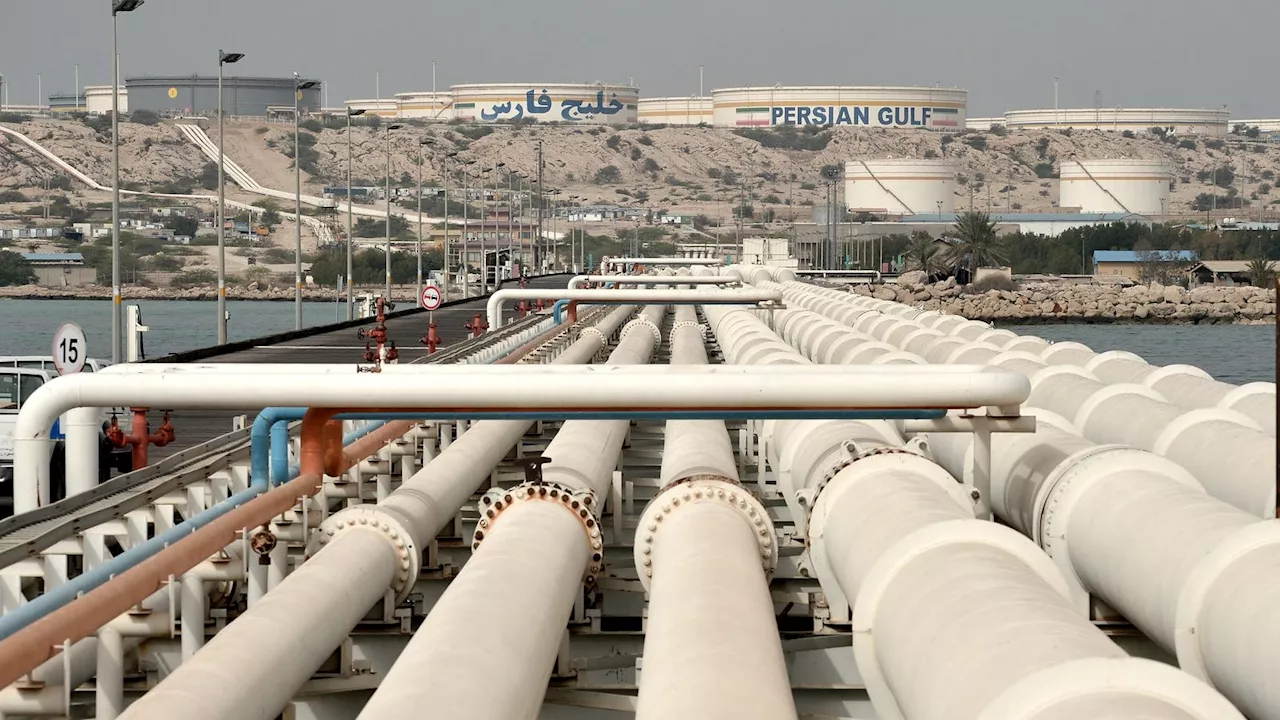
Gas prices in the United States could exceed $3 per gallon for the first time this year, following recent tensions with Iran. Analysts predict that crude oil prices will rise sharply after airstrikes initiated by the U.S., leading to significant repercussions at the fuel pump.
According to Patrick DeHaan, Head of Petroleum Analysis at GasBuddy, oil prices could increase by 5 to 10%, potentially pushing the cost above $70 per barrel. This forecast follows a closing price of around $65 per barrel on Friday, indicating a sharp upward trend.
Impact of Middle East Tensions
The escalating conflict in the region has already begun to impact the market. DeHaan noted that the national average for gas could reach $3 per gallon as early as Monday, marking a significant seasonal increase. He compared the current situation to previous spikes, emphasizing that while prices may rise, they will likely remain below the surges witnessed in 2022 when demand surged post-pandemic and due to geopolitical tensions following Russia’s invasion of Ukraine.
On Saturday, reports surfaced about potential disruptions in the Strait of Hormuz, a crucial route for oil shipments. Approximately 20% of the world’s oil transits through this strait, making any instability a major concern for global markets. DeHaan pointed out that uncertainty surrounding this waterway is “the biggest concern” for oil prices, as traders may shy away from oil if disruptions continue.
The ramifications of the conflict extend beyond immediate price increases. Samantha Gross, Director of the Energy Security and Climate Initiative at the Brookings Institute, highlighted that, unlike earlier U.S. military actions against Venezuela, the situation with Iran poses a greater threat to global oil supplies. “Iran is a larger oil producer than Venezuela, and thus the consequences of a disruption could be larger,” Gross stated.
Long-term Outlook and Economic Concerns
As tensions rise, economists warn of potential long-term impacts on the global economy. Bob McNally, founder and president of Rapidan Energy, cautioned that prolonged closures in the strait could lead to a “global recession.” Such a scenario could have far-reaching effects, not only on the price of gas in the U.S. but also on economic stability worldwide.
Gas prices have been on an upward trajectory since January, attributed to seasonal changes and the transition to summer-blend gasoline, which is mandated by the Environmental Protection Agency (EPA) to reduce emissions but typically comes at a higher cost. As of Thursday, the national average for gas stood at approximately $2.90 per gallon.
Despite assertions from former President Donald Trump that gas prices were below $2.30 in most states during his State of the Union address, data indicates that no states were reporting prices that low as of Saturday. The current situation underscores the volatile nature of fuel prices, particularly in light of international events.
As analysts continue to monitor developments in Iran and the broader Middle East, American consumers may need to brace for a potential spike in fuel costs, with prices expected to surpass $3 per gallon in the coming days.











