










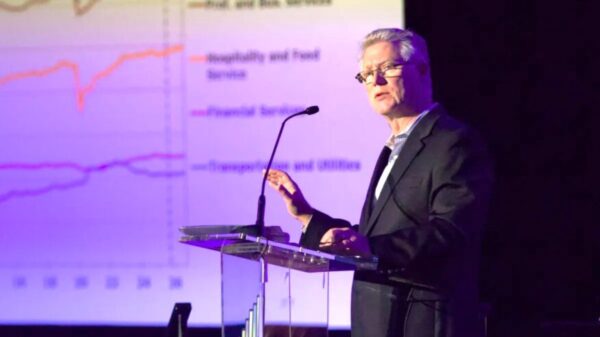

























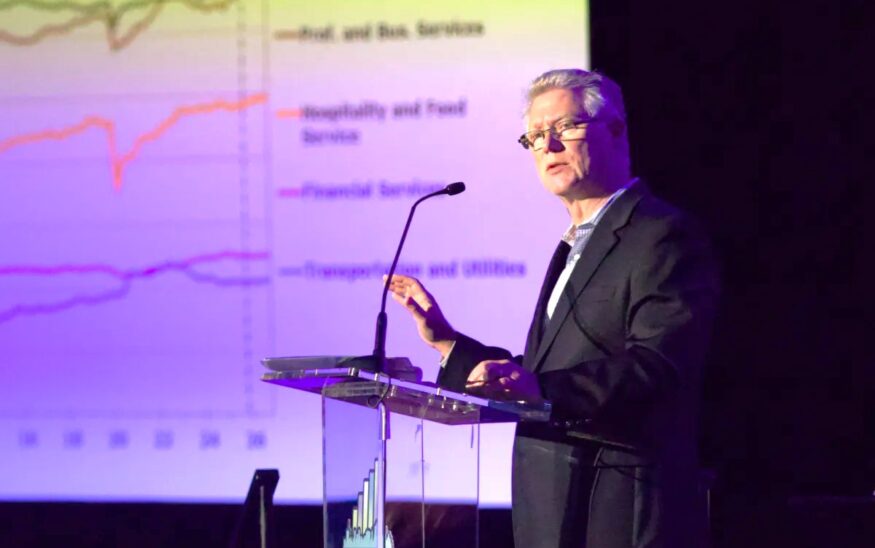
Tulsa’s job market is experiencing significant growth, surpassing that of Oklahoma City, according to insights shared during the Tulsa Regional Chamber’s annual State of the Economy meeting. Economists Mark Snead, president of RegionTrack, and Joe Seydl from JPMorgan highlighted the city’s expanding economic landscape and the potential impact of emerging technologies, particularly artificial intelligence (AI), on the workforce.
During the meeting, held on March 14, 2024, Snead noted that Tulsa’s growth over the past 18 to 24 months has accelerated, while Oklahoma City’s growth has shown signs of slowing. This trend is contributing to Oklahoma’s ranking as the 14th state in the nation in job growth over the last year. “Having both of the major metropolitan areas really clicking at the same time is underlying one of the reasons for this progress,” Snead explained.
Population Growth Driven by Affordable Housing
A key factor in Tulsa’s job market momentum is its appeal to new residents, largely driven by affordable housing options. Seydl emphasized that the median home price in Tulsa remains more accessible compared to many coastal states, where affordability has become a pressing issue. “The average age for first-time homebuyers has now reached an all-time high of 40 years old,” he remarked, referencing data from the National Association of Realtors. This demographic shift indicates a growing trend of younger individuals seeking more affordable living conditions in states like Oklahoma and Texas.
Seydl’s recent relocation from New York to Dallas has provided him with firsthand insight into this migration trend. He believes that as younger professionals search for more affordable housing, cities like Tulsa will likely see an influx of new residents, further enhancing the local economy.
AI and the Evolution of Job Requirements
As Tulsa’s job market grows, the integration of AI into various sectors is expected to reshape the landscape of employment. Instead of eliminating jobs, Snead suggests that AI will necessitate a greater emphasis on technology skills across numerous fields. “We’re slicing up tech workers and putting their tasks into thousands and millions of other jobs,” he stated. This transformation is anticipated to drive a wave of “creative destruction,” leading to new opportunities for those equipped with the right technological expertise.
Despite concerns about potential job losses due to automation, both economists are optimistic about the future. They assert that the demand for tech-savvy professionals will only increase as industries adapt to technological advancements.
In terms of economic stability, Seydl highlighted the resilience of the U.S. economy amid ongoing trade tariffs, particularly those imposed by President Trump on foreign goods. He expressed confidence that the nation would avoid a recession, thanks to exemptions for key sectors like technology and semiconductors, which are critical to the AI revolution. “That sector has been such a critical component of U.S. growth this year,” he noted.
Looking ahead, Snead predicts that both Tulsa and Oklahoma will either match or slightly exceed the national job growth rates in the coming year. He anticipates that Oklahoma City will align with Tulsa in terms of job growth, showcasing a robust economic environment across the state.
The annual meeting brought together various organizations, including the George Kaiser Family Foundation and the Tulsa Airport Improvement Trust, signaling a collaborative effort to bolster the local economy. As Tulsa continues to evolve as a desirable place to live and work, its future appears bright, marked by growth, opportunity, and innovation.