









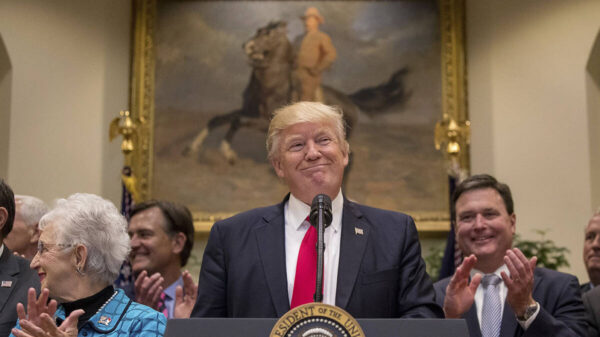









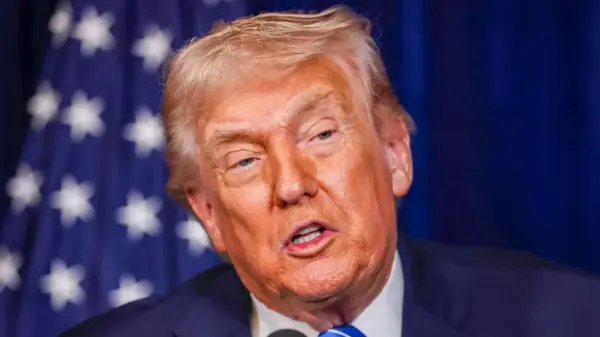














President Donald Trump announced on December 17, 2025, that U.S. troops will receive a bonus of $1,776 as a Christmas gift. During a televised address from the White House’s Diplomatic Reception Room, Trump framed this payment as part of his broader commitment to military personnel while simultaneously addressing concerns about the economy.
The bonus, referencing the upcoming 250th anniversary of the signing of the Declaration of Independence, was presented as a “warrior dividend” intended for approximately 1.45 million military members. Trump asserted that this payment could alleviate some financial pressures faced by military households, particularly in light of rising inflation and a recent decline in job growth.
Despite the festive announcement, Trump’s speech leaned heavily into political rhetoric, aiming to shift blame for the current economic climate onto his predecessor, Joe Biden. “Eleven months ago, I inherited a mess, and I’m fixing it,” he stated, emphasizing his belief that the U.S. is on the brink of an economic boom. His remarks sought to counter public dissatisfaction regarding his administration’s economic management, particularly as inflation has persisted despite his promises for improvement.
Trump’s address took place at a time when public polling indicates widespread frustration with his handling of the economy. Inflation has surged following the implementation of his tariffs, which he claims are essential for boosting domestic manufacturing. However, many Americans have felt the pinch of rising consumer prices, which have resulted from these tariffs.
Economic Challenges and Promises
While the President promised that mortgage rates would decline and unveiled plans for significant housing reforms, the reality of the economic situation suggests a more complicated picture. The consumer price index has shown an annual increase of 3%, a rise from 2.3% in April. Additionally, the job market has softened, with monthly job gains averaging only 17,000 since April 2025, when Trump announced his controversial import taxes.
Despite these challenges, Trump claimed that investment commitments for new factories would rejuvenate manufacturing jobs, and he anticipated an increase in consumer spending as tax refunds grow next year. He also addressed the impending expiration of subsidies from the Affordable Care Act, attributing potential health insurance premium hikes to Democratic policies. While some lawmakers are advocating for solutions, Trump suggested that financial support should be directed to insurance buyers rather than companies, though he has not provided a specific legislative proposal.
The speech aimed to counteract the President’s declining popularity ahead of the vital midterm elections in 2026, which will determine control of both the House and the Senate. By addressing the nation during prime time, Trump sought to regain momentum after recent Republican setbacks in elections, despite the networks’ previous hesitance to broadcast politically charged presidential addresses.
Public Reaction and Political Landscape
Trump’s rapid-fire delivery and at times intense tone reflected his awareness of growing public discontent. He reiterated claims of economic growth, asserting that foreign leaders view the U.S. as “the hottest country anywhere in the world.” However, these assertions echo sentiments previously expressed by Biden, who faced similar challenges in convincing the public amidst rising inflation.
The current economic landscape is marked by mixed signals. While the stock market shows signs of recovery and gasoline prices have decreased, the lingering effects of inflation and a softening job market continue to raise concerns among the public. Many Americans are left navigating these complexities, feeling uncertain about their financial futures.
As the holiday season approaches, Trump’s efforts to bolster support among military families and address economic concerns will be closely scrutinized. The upcoming months will be crucial, not only for his administration but also for the Republican Party as they prepare for the pivotal midterm elections.