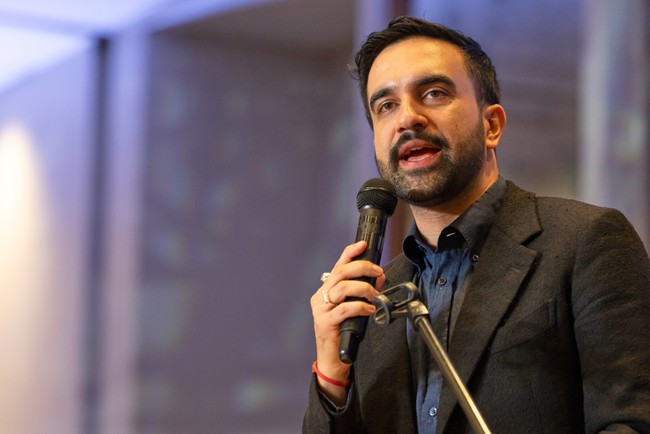

























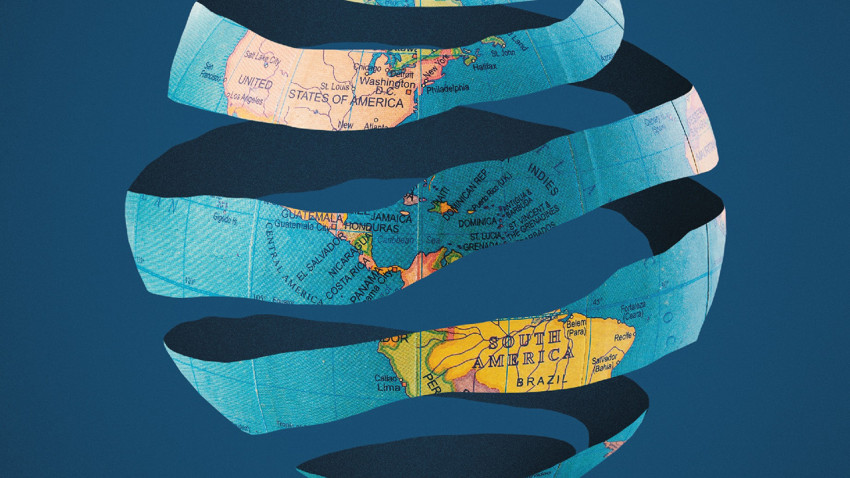
A new book titled The Doom Loop: Why the World Economic Order is Spiraling into Disorder by Eswar Prasad argues that the same forces responsible for global prosperity and reduced conflict during the postwar era are now contributing to rising instability. Prasad, a professor at the Cornell SC Johnson College of Business and a senior fellow at the Brookings Institution, explores how interconnections between economics, domestic politics, and geopolitics are increasingly harmful and difficult to escape.
Prasad initially approached his research with a hopeful perspective, suggesting that the world might be transitioning toward a more stable order featuring a more balanced distribution of economic and geopolitical power. However, as he delved deeper into the complexities of globalization, he discovered a more troubling reality.
The book highlights a paradox: while globalization has successfully integrated economies and lifted millions out of poverty, particularly in Asia, the benefits have been unevenly distributed and poorly managed. When capital flowed into emerging markets, it often exited just as quickly, resulting in severe debt crises in countries such as Mexico, Thailand, and Indonesia. These financial upheavals led to the collapse of governments and a significant erosion of public trust.
In developed nations, the consequences of globalization manifested as entire industries diminished, fueling feelings of resentment that found expression in populist politics. Prasad notes that these political reactions have not remained confined within national borders.
“False populists hostile to globalization have painted it as a phenomenon that enables one country’s gains only at the expense of others rather than promoting common prosperity,” Prasad stated. He cautions that this perspective threatens the foundational rules established after World War II, putting them at risk of decay or irrelevance.
Institutions such as the International Monetary Fund and the World Trade Organization, historically dominated by advanced economies, are struggling to adapt to a world where economic power is more widely dispersed. As their legitimacy wanes, new institutions, many backed by China, have emerged but often contribute to further fragmentation rather than fostering cooperation.
This situation has led to a negative feedback loop: economic volatility breeds political backlash; that backlash undermines global rules; and the breakdown of those rules intensifies economic volatility.
Prasad also examines the rise of “middle powers”—countries like India, Brazil, and Indonesia—which have transitioned from impoverished to influential but are now caught in the crossfire of intensifying rivalry between the United States and China. This rivalry pressures these nations to choose sides on critical issues involving trade, technology, and security, complicating global cooperation when it is most needed.
Moreover, Prasad warns of the darker implications of technological advancements. Innovations like digital currencies and artificial intelligence promise increased efficiency and growth but also exacerbate inequality and complicate governance. Digital finance can bypass weak institutions, hastening the spread of risk, while artificial intelligence concentrates wealth and power.
Despite these challenges, Prasad emphasizes that the current trajectory is not predetermined. He criticizes both nostalgia for a bygone global order and a deterministic view of permanent disorder. Instead, he calls for pragmatic reforms aimed at reshaping international institutions to align with contemporary realities.
The book advocates for the establishment of safety nets to cushion against economic shocks and for the creation of regulations governing new technologies before crises necessitate their implementation.
In conclusion, The Doom Loop posits that escaping the cycle of instability will require Herculean efforts. Prasad asserts that “despite perceptions that humanity is being swept along by forces beyond its control, leaders, policymakers, and ordinary citizens can—and should—play active roles in shaping how these forces are created and play out.”